
- Commercial flat roof repair, maintenance, and replacement planning
- Evaluate drainage, seams, penetrations, and recurring leak paths
- Compare TPO and modified bitumen roof assemblies
A roof-specific evaluation helps define the membrane condition, water path, and appropriate next step for the building.
BUILT FOR LOW-SLOPE COMMERCIAL ROOFS
Commercial Flat Roofing Contractor in Tampa Bay
Commercial flat and low-slope roofs depend on a coordinated membrane assembly, drainage path, insulation, substrate, flashings, roof edges, penetrations, and installation details. An issue that appears in one area can involve the surrounding roof system or a water path beyond the visible spot.
TPO and modified bitumen are two common membrane approaches for commercial flat roofs. The right system is not selected from a material name alone; it should be matched to the building, the existing roof condition, drainage, access, expected use, and the documented project scope.
Affordable Roofing Systems helps Tampa Bay property stakeholders evaluate reported roof conditions, compare repair or replacement paths, and understand the work recommended for the actual building.
PLAN FOR LOCAL EXPOSURE
Commercial Flat Roof Conditions in Tampa Bay
A commercial low-slope roof should be assessed as a complete water-management and weather-exposure system, with the building’s layout and operating needs in view.
Ponding and Drainage
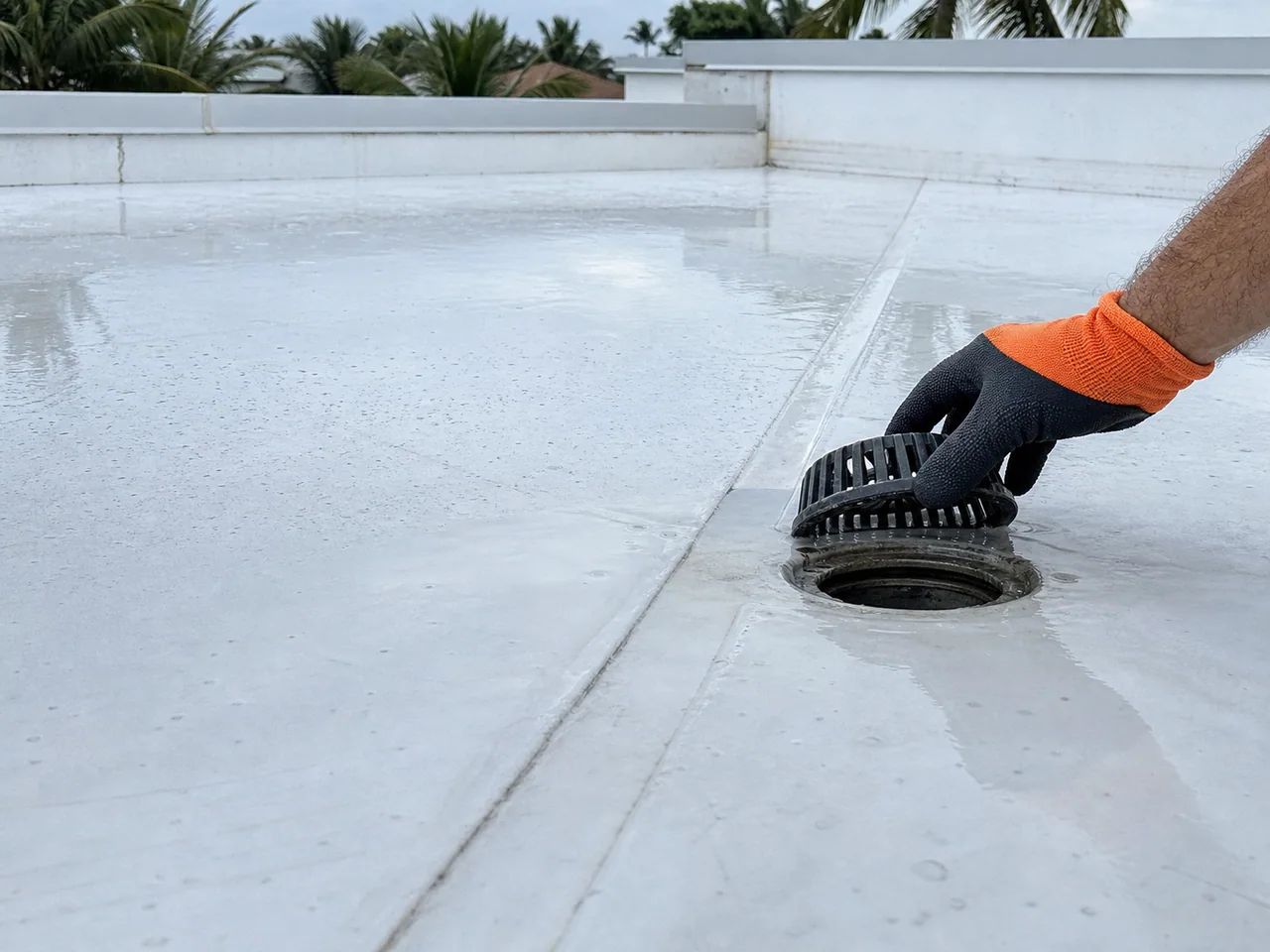
Standing water, slow drainage, low areas, drains, scuppers, gutters, and roof-edge details should be reviewed together to understand the water path.
Heat and Ultraviolet Exposure
Sun exposure can affect membrane surfaces, coatings, flashings, and sealants, while material performance depends on the selected assembly and site conditions.
Wind-Driven Rain
Seams, flashings, roof edges, transitions, penetrations, and walls need to be assessed as connected details when the building is exposed to storms.
Penetrations and Equipment
Curbs, pipes, vents, equipment supports, and other roof penetrations add transitions that need compatible flashing and maintenance attention.
Roof Access and Traffic
Service access, pathways, equipment work, and incidental traffic can affect how a commercial roof is reviewed, protected, and maintained.
Existing Roof Conditions
Previous repairs, moisture, insulation, substrate condition, and concealed details can change the appropriate repair or replacement scope.
CHOOSE THE RIGHT ASSEMBLY
Commercial Flat Roofing Systems
TPO and modified bitumen use different materials and installation approaches. The building, existing roof, drainage, insulation, flashing, penetrations, access, and documented system requirements all matter when comparing them.
Get a FREE estimate to review the roof system, visible conditions, and recommended next step for your commercial property.
 Single-ply membrane
TPO Roofing Systems
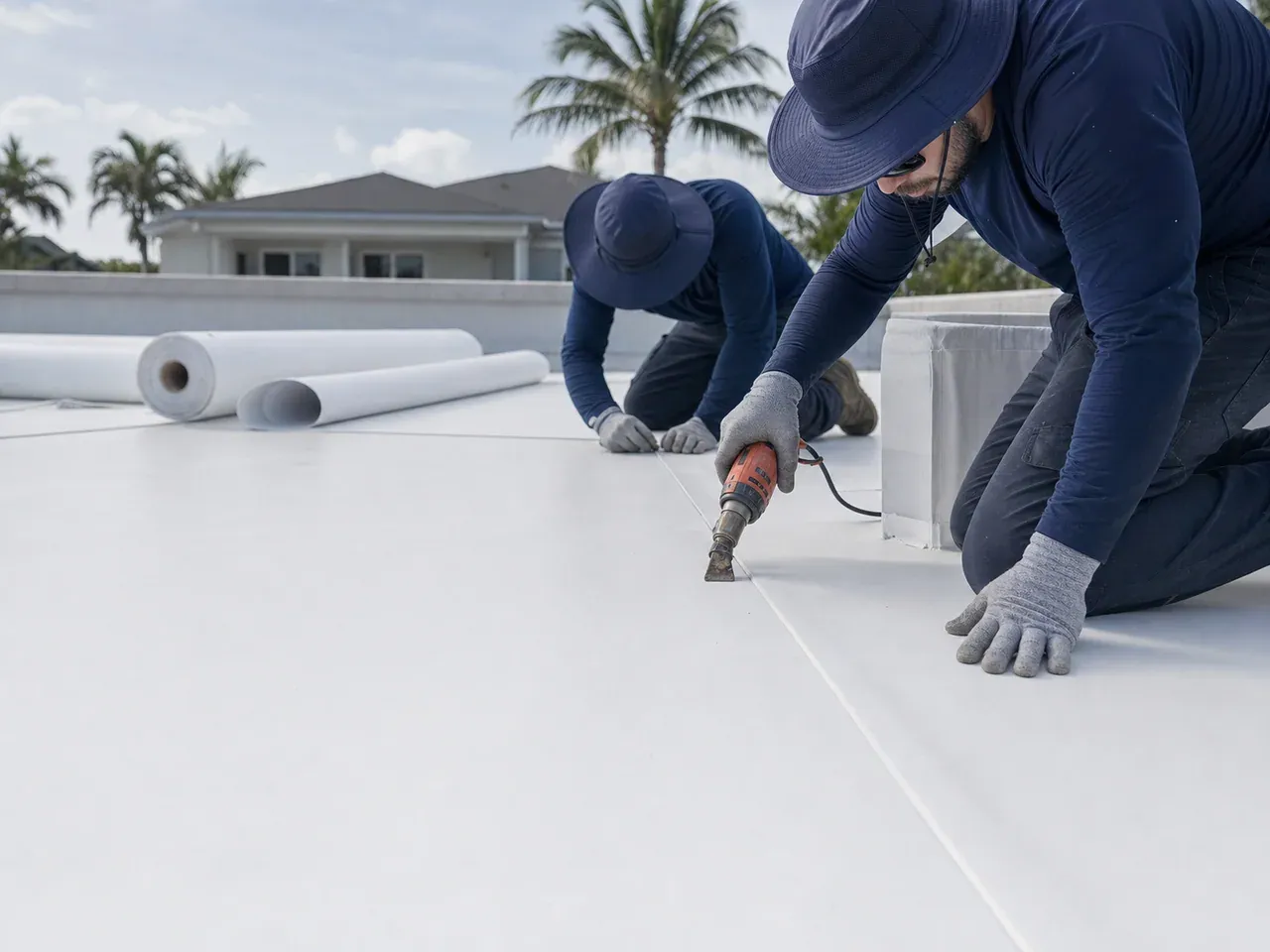
TPO is a single-ply membrane system selected for a low-slope roof when its documented membrane, seams, attachment, flashing, drainage, and compatible details fit the building and scope.
- Single-ply membrane assembly
- System-specific seam and attachment details
- Compatible flashing, drainage, and roof-edge planning
 Layered membrane
Modified Bitumen Roofing
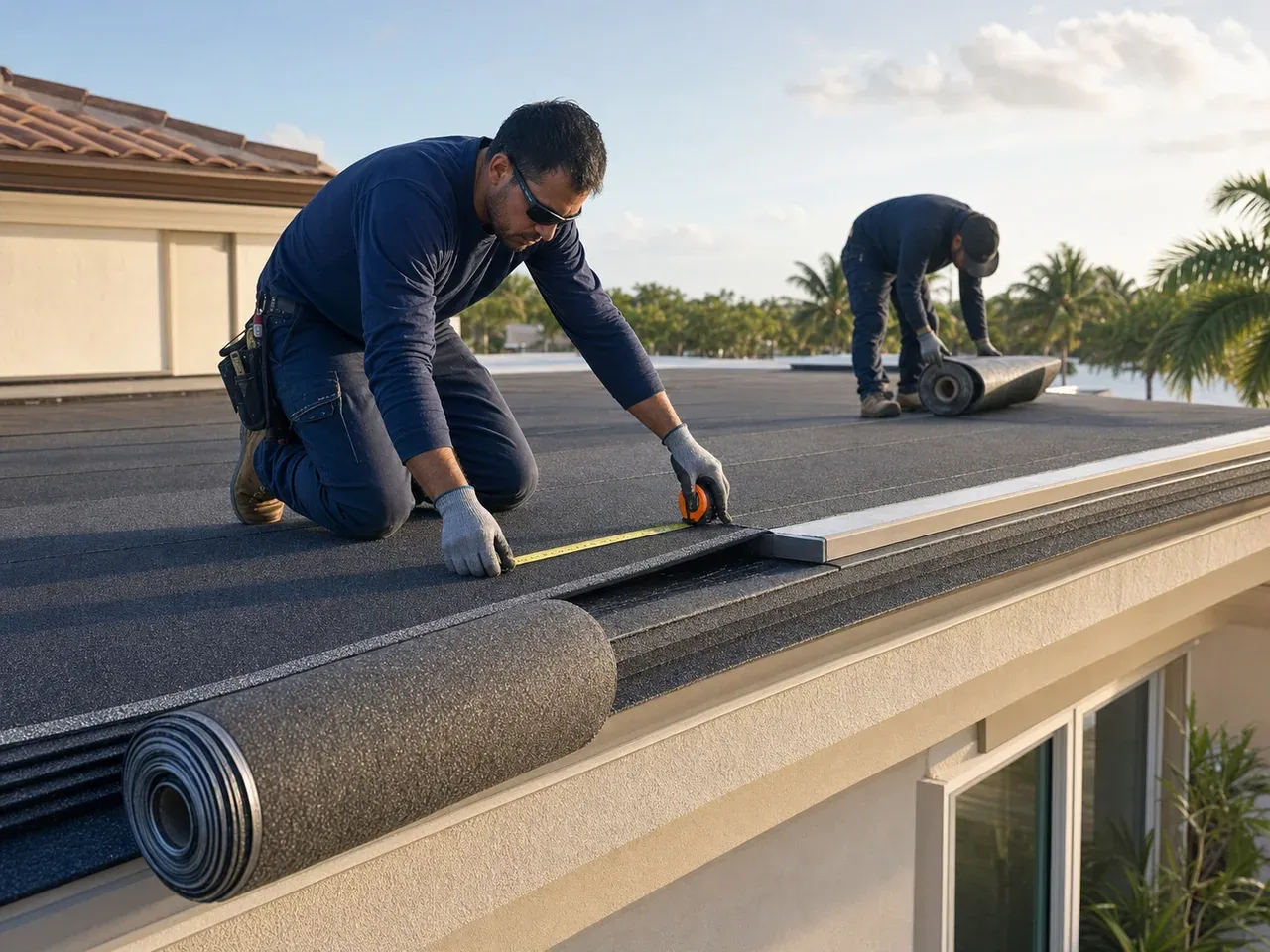
Modified bitumen is a layered asphalt-based membrane approach whose surfacing, application method, flashing, drainage, and compatible details are selected for the roof assembly and conditions.
- Layered membrane assembly
- Selected application and surfacing approach
- Compatible flashing, drainage, and roof-edge planning
MAKE A ROOF-SPECIFIC DECISION
The complete membrane assembly matters
- Drainage, slope, insulation, substrate, flashing, roof edges, and penetrations are as important as the visible membrane.
- Existing moisture, prior repairs, roof access, equipment, and building operations can affect the recommended scope.
- A written scope helps stakeholders compare materials, system details, work areas, assumptions, and next steps.
COMMERCIAL ROOFING SCOPE
Commercial Flat Roofing Services
Not every commercial flat roof condition requires the same response. The recommended approach should reflect the membrane, the extent of the condition, drainage, building use, access, and the larger roof assembly.
- Commercial flat roof repair and leak investigation
- Commercial flat roof replacement planning
- TPO membrane installation, repair, and maintenance planning
- Modified bitumen system installation and repair planning
- Drainage, scupper, roof-edge, and flashing evaluation
- Penetration, curb, transition, and water-path review
If you are unsure whether the next step is maintenance, repair, or replacement, begin with an evaluation that documents the roof condition and the scope appropriate for the building.
A CLEAR PROJECT PATH
Commercial Flat Roofing Project Steps
- 01
Evaluate the Roof and Water Paths
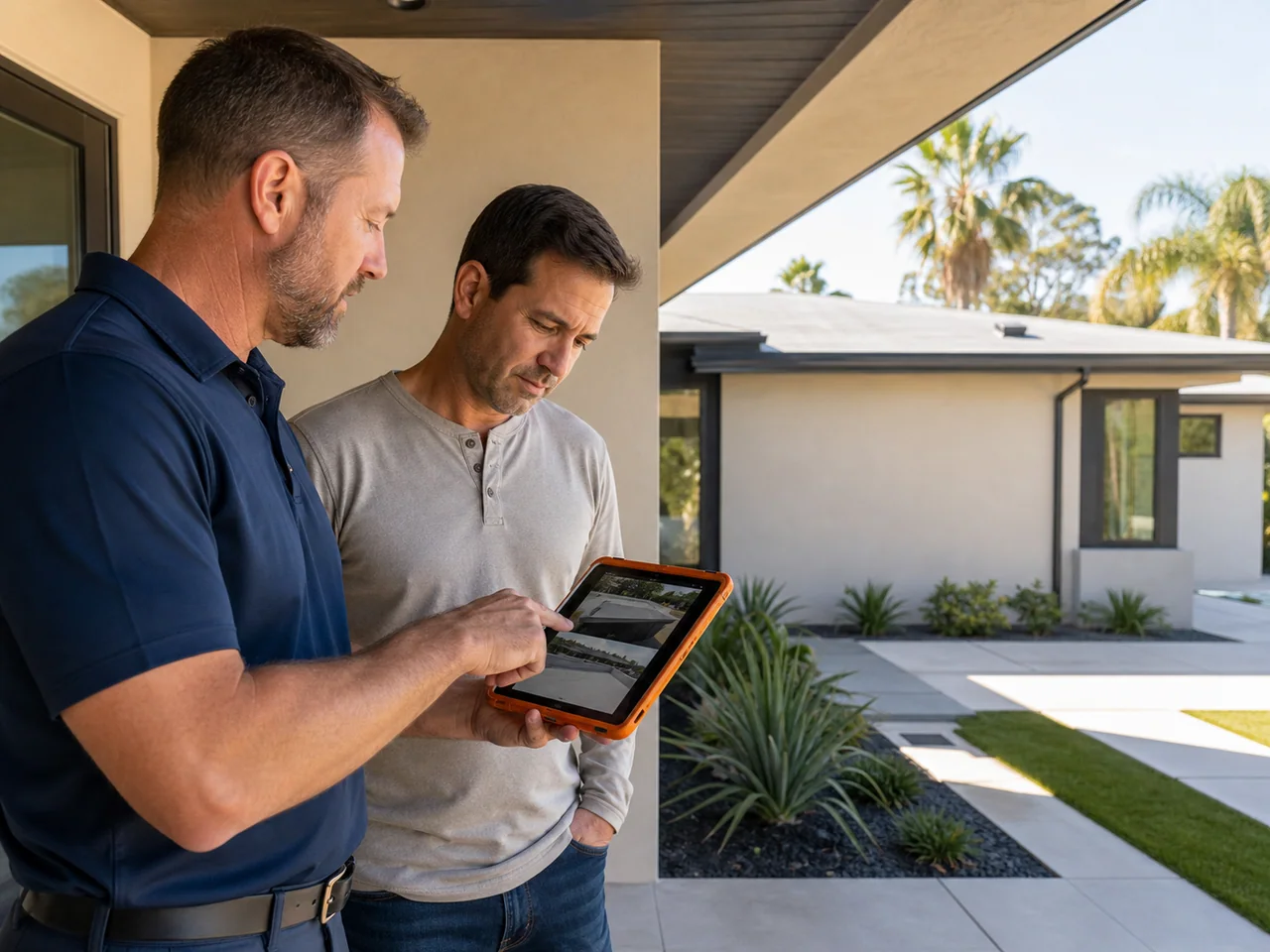
Review visible membrane condition, drainage paths, seams, penetrations, roof edges, flashings, access, and reported interior concerns to define the areas that need attention.
- 02
Prepare a Written Scope
Document the system conditions, recommended work, material approach, known details, and project assumptions so building stakeholders can compare a defined scope.
- 03
Complete the Approved Roofing Work
Carry out the approved repair, maintenance, or replacement scope using compatible materials and the installation details required by the selected roof system.
- 04
Review Details and Close Out
Review the completed visible work, project documentation, and next care considerations with the property contact when the approved scope is finished.
LOCAL COMMERCIAL COVERAGE
Commercial Flat Roofing Across Tampa Bay
Affordable Roofing Systems evaluates commercial flat and low-slope roofing conditions throughout Tampa Bay, with attention to the building, roof system, drainage, access, and scope required for the actual property.
A commercial roof evaluation can document the membrane condition, water paths, seams, flashings, penetrations, roof edges, and reported interior concerns before property stakeholders choose the next step.
Explore Our Commercial Roofing Services→PROJECT PLANNING
What Affects Commercial Flat Roofing Cost?
Commercial flat roofing cost depends on the actual building, roof geometry, existing conditions, selected membrane assembly, access, coordination, and the work required to deliver the documented scope.
- Roof area, geometry, stories, access, staging, and occupied-building coordination
- Selected membrane assembly, insulation, attachment, flashings, edges, drains, scuppers, and penetrations
- Existing roof removal, substrate condition, trapped moisture, previous repairs, and concealed conditions
- Drainage adjustments, tapered insulation, water-management details, and transitions
- Permits, safety requirements, logistics, material availability, scheduling, documentation, warranty requirements, closeout needs, and system-specific installation details
PAYMENT FLEXIBILITY
Commercial Roof Project Planning
A roofing project can require a coordinated planning conversation when a building needs repair, replacement, or a broader water-management scope. Available financing options and terms should be reviewed for the specific project.
Explore the current options available through our financing partner:
HearthEligibility, rates, payments, and terms are determined by the applicable provider and should be confirmed before making a financing decision.
Financing Options →CLIENT FEEDBACK
What Clients Say About Their Flat Roofing Experience
Clear options, project communication, and useful documentation matter when property stakeholders are evaluating a flat roofing scope.
“They offered more included at a better price than other companies we spoke with.”
“My estimator explained everything clearly and helped me understand my options.”
“This is the second roof that affordable roofing systems has done for us both times they did an awesome job. Pricing was very reasonable and below other quotes. Process was quick and roof was done in one day.”
ANSWERS BEFORE THE ESTIMATE
Commercial Flat Roofing FAQs
These common questions cover commercial membrane systems, drainage, repair-versus-replacement decisions, cost factors, and the information that supports a useful roof evaluation.
A commercial roof evaluation can identify the visible system, conditions, water paths, documentation available, and the practical next step for the property.
How should a commercial flat roof be maintained?
A maintenance plan should account for the installed membrane system, drains, scuppers, gutters, seams, flashings, penetrations, roof edges, traffic areas, debris, and storm-related changes. The correct frequency and work scope depend on the actual roof, its system documentation, building use, access, and observed condition. A qualified commercial roofing professional can document visible conditions and recommend compatible maintenance or repair steps for the specific assembly.
What should be done about ponding water on a commercial flat roof?
Standing water or slow drainage should be documented and evaluated with the surrounding roof details, including low areas, drains, scuppers, gutters, roof edges, seams, flashings, penetrations, insulation, and the visible membrane. The appropriate response depends on why water is collecting and the condition of the complete roof assembly. Avoid assuming a surface patch will correct the issue before the water path and affected roof conditions have been reviewed.
Can a commercial flat roof be repaired instead of replaced?
A targeted repair may be considered when the condition is limited and the surrounding membrane assembly can support a compatible repair. A broader replacement scope may be appropriate when recurring leaks, widespread membrane changes, drainage concerns, moisture conditions, or other system issues affect more than an isolated area. An evaluation of the actual roof is needed to distinguish the observed symptom from the work required for a durable scope.
How do TPO and modified bitumen compare for a commercial flat roof?
TPO is a single-ply membrane system, while modified bitumen is a layered asphalt-based membrane approach. Neither material name alone determines the right answer for a building. The selected system should be compared with the roof design, drainage, insulation, substrate, flashings, penetrations, roof edges, access, existing conditions, and current product requirements. A written, roof-specific scope is more useful than a generic material comparison when choosing a commercial roof assembly.
What affects commercial flat roofing cost?
Cost depends on the roof area, geometry, access, selected membrane assembly, insulation, existing roof conditions, removal requirements, drainage, flashings, penetrations, roof edges, safety needs, logistics, permits, schedule, and coordination with building operations. Concealed moisture, substrate conditions, and previous repairs can also affect the documented scope. A roof-specific assessment is the appropriate way to compare complete commercial proposals; a generic per-square-foot figure does not define the work needed for a particular building.
What information helps with a commercial flat roof evaluation?
Useful information can include the reported roof or interior location, timing of leaks, photos of visible conditions, prior repair records, available warranty documents, known membrane type, roof access requirements, equipment or tenant coordination needs, and any recent storm or maintenance history. This information helps establish where the roof review should begin. The evaluation should still confirm the visible conditions and the water path at the actual building before a repair, maintenance, or replacement scope is recommended.
SCHEDULE AN EVALUATION
Schedule a Commercial Flat Roof Evaluation
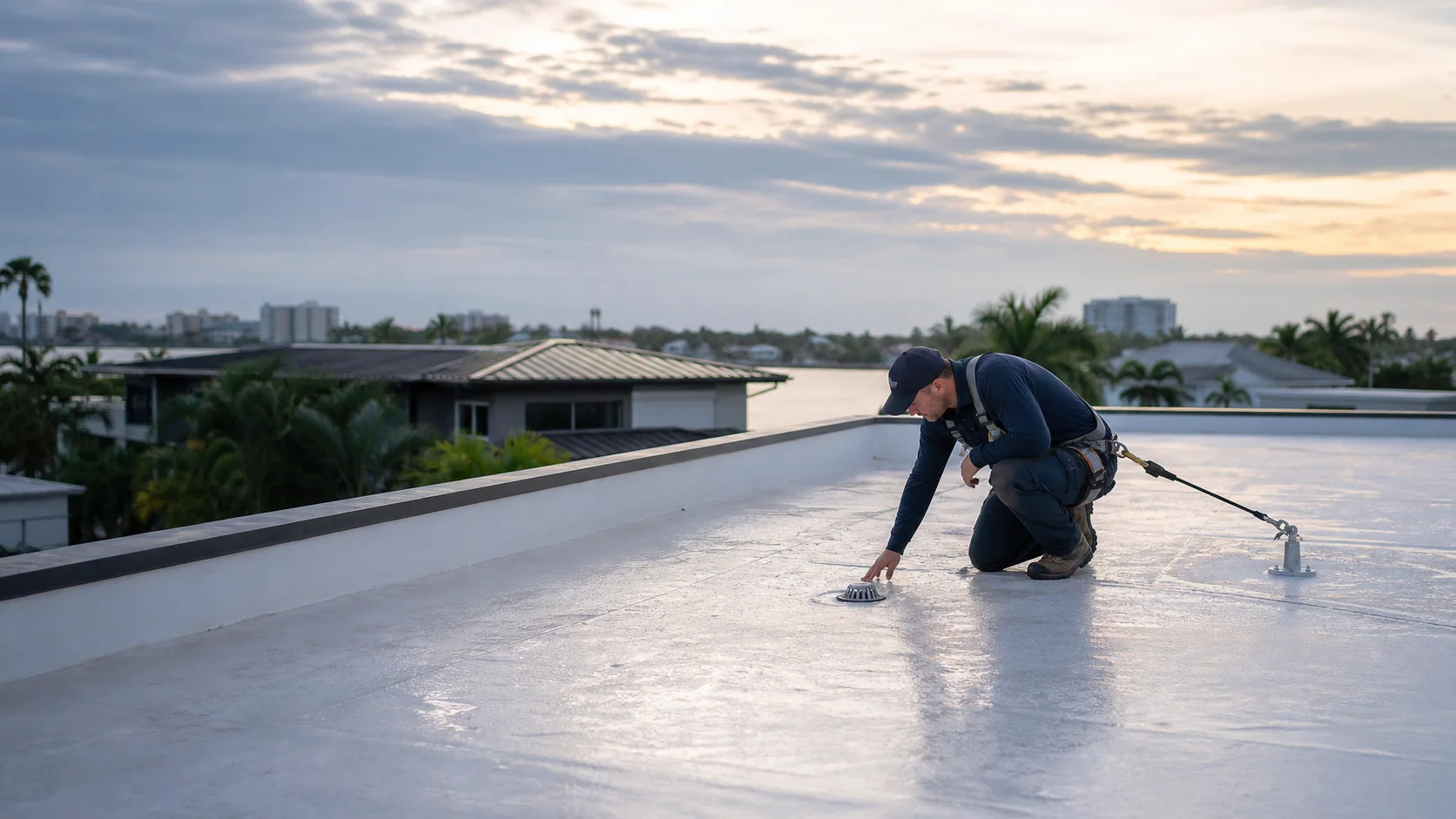
If your commercial property has a recurring leak, ponding water, membrane concern, visible roof change, or a project that needs planning, our team can assess the roof and explain what we find.
Contact our Tampa Bay commercial roofing team today.