4 Roof Deck Protection Options for Your Home
Understand the roof deck, the protective layer beneath shingles, and the questions that lead to a complete replacement scope...
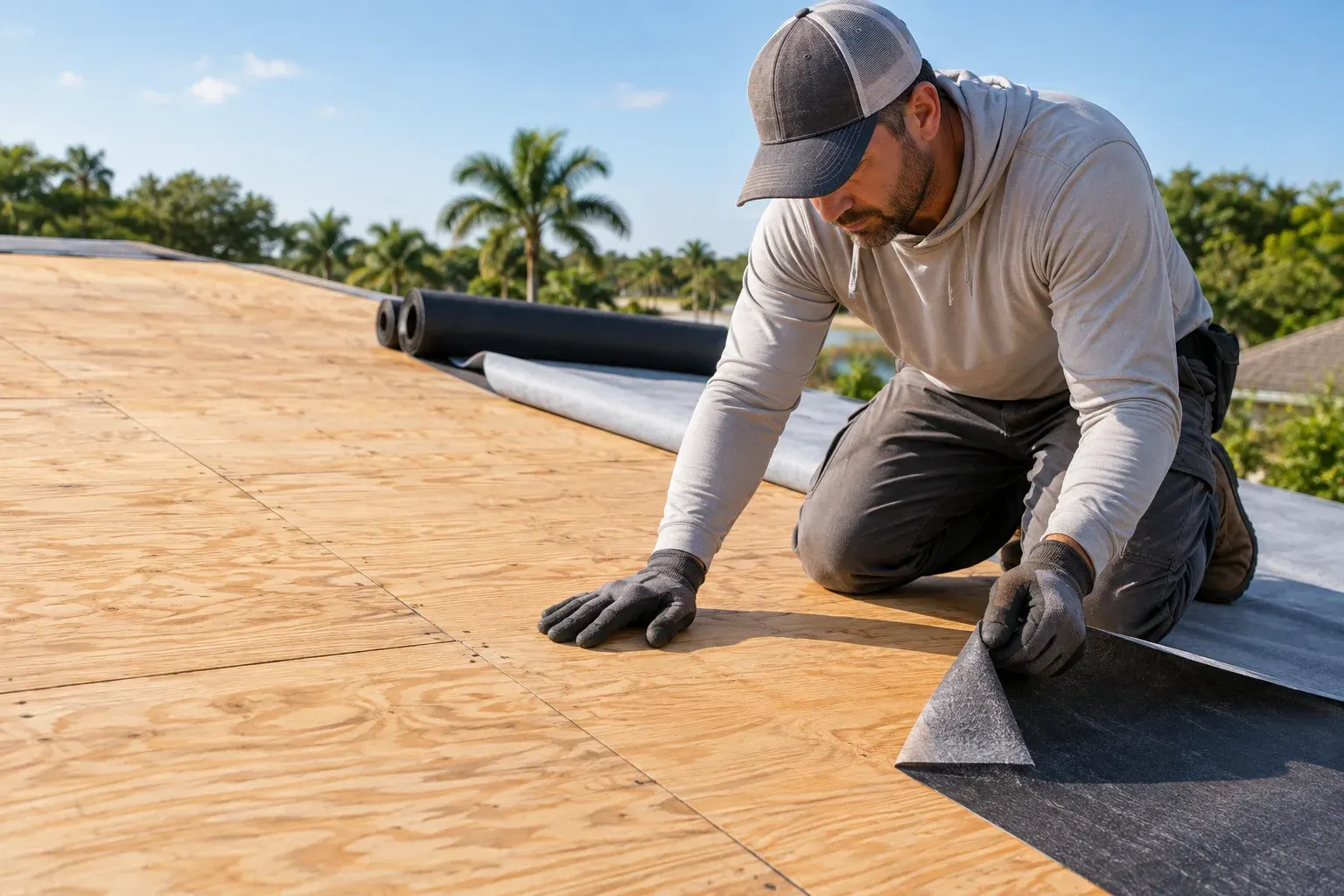
Table of Contents
- Start With the Roof Deck, Not Just the Shingles
- What Roof Deck Protection Does
- Four Underlayment Categories to Compare
- Why Deck Condition Matters During Replacement
- Decking Types and Existing Conditions
- The System Is Only as Good as the Details Around It
- Selection Needs a Project-Specific Written Scope
- Protect the Roof by Understanding the Whole Assembly
A finished roof is easy to notice; the layers below it usually are not. The original article focused on the protective layer between the roof deck and shingles, while the companion source explained why the deck itself is a vital structural part of the roof. Together, they point to the same idea: a roof should be considered as a system, not simply as the material visible from the street.
This guide keeps the legacy articles’ focus on deck protection, underlayment categories, and deck condition, but puts the information in the order a homeowner can use during a replacement discussion. It is not an installation guide or a product recommendation for every roof. The right layers and details depend on the selected system, roof design, local requirements, manufacturer instructions, and the condition found when the existing roof is evaluated.
The useful outcome is a better conversation with the contractor: what is supporting the roof, what is included between the deck and the covering, what conditions are known or still hidden, and how the written scope handles each part of the assembly.
Start With the Roof Deck, Not Just the Shingles
The roof deck is the structural surface that supports the roofing assembly and gives weatherproofing materials a place to attach. The 2020 companion article explained that homeowners may overlook it because they do not see it in daily life. That invisibility does not make it optional. The deck affects how the roof is evaluated, prepared, fastened, detailed, and repaired when conditions are found.
When discussing residential roofing in Brandon FL, it is reasonable to ask the contractor to explain the deck condition and the protective layers separately from the chosen shingle. That keeps an estimate from reducing the whole project to a color, a brand, or a surface-material price.
A deck does not automatically need replacement every time a roof is replaced. The companion source made that distinction: when the deck is sound, it may remain in place; when parts are severely deteriorated or unsuitable, those areas may need attention before the new roof can continue. The final decision should come from the roof-specific evaluation and the written scope, not an assumption that every deck is either perfect or a full replacement.
What Roof Deck Protection Does
The original 2019 article used the phrase roof deck protection for the material installed between the deck and the shingles. In modern roofing conversations, that layer is often discussed as underlayment or as part of the system’s water-management plan. Its purpose is not to make one material indestructible. It works with shingles, flashings, edges, ventilation, fastening, and the rest of the assembly to manage conditions that can challenge the roof covering.
The source described an added layer that can help resist wind-driven rain and reduce the chance that water reaches vulnerable areas below the covering. That is useful context, but the effect depends on the complete system and how it is installed. A product name alone cannot tell you what protection the finished roof will provide at valleys, penetrations, walls, edges, or transitions.
Ask which water-control layers are included, where they will be used, and how they connect to the other details in your scope. That question is more informative than asking for a single generic promise about performance or roof life.
Four Underlayment Categories to Compare
The legacy article named four GAF product approaches: synthetic materials, Shingle-Mate®, VersaShield®, and RoofPro™. Product lines, formulations, availability, requirements, and contractor offerings can change, so the names from a 2019 article should not be treated as a current product menu from Affordable Roofing Systems. The enduring value is the set of material questions those examples raise.
Use the categories below to understand the discussion, then ask the contractor which current, compatible product or assembly is proposed for your roof and why. The answer should be tied to the selected roofing system and written documentation—not copied from a generic online list.
Synthetic Underlayments
The source grouped Tiger Paw™, Deck-Armor™, and FeltBuster® as synthetic options with different intended characteristics, including UV-stabilized or breathable polypropylene descriptions. In a current estimate, ask what the proposed synthetic layer is designed to do, how long it may be exposed during the work, what roof coverings it is compatible with, and which installation instructions apply. Those details matter more than assuming every synthetic sheet performs the same way.
Fiberglass-Reinforced Underlayments
Shingle-Mate® and the article’s VersaShield® example represented fiberglass-reinforced approaches. The source discussed flatter lay, moisture management, and system-level fire considerations. Those are prompts for a product-specific conversation, not universal results. If a contractor proposes this type of component, ask what it contributes in the selected assembly, how it is detailed, and which current technical documents support the proposed use.
Specialized Moisture-Protection Layers
The RoofPro™ example in the source described an SBS-modified, fiberglass-reinforced layer intended to add moisture protection. The important general question is where a specialized layer is needed and how it integrates with flashing, deck preparation, shingles, and roof geometry. A contractor should be able to explain the location and reason in the written scope rather than using a broad product label as a substitute for the detail.
What the Four Options Have in Common
Each example from the original article belongs below the finished roof covering and above the deck. That position is why the material cannot be evaluated in isolation. The deck must be suitable, the covering and details must be compatible, and the product must be installed as its current instructions require. A roof system is strongest when those decisions are coordinated rather than selected one layer at a time.

Why Deck Condition Matters During Replacement
The companion decking article added a key point to the original underlayment discussion: a protective layer cannot erase a structural or moisture-related condition below it. During a replacement, the existing covering may conceal soft areas, deterioration, old repairs, or other issues that need to be evaluated before new materials are installed. Removing the old roof gives the contractor an opportunity to inspect what will support the new system.
If a homeowner has noticed an interior stain, soft spot, prior leak, or unusual roof movement, that history should be discussed at the estimate. It may help focus the evaluation, but it does not diagnose the deck from the ground. The contractor should explain what was visible before work, what can only be confirmed later, and how any newly discovered condition will be documented and approved.
That distinction can also matter when homeowners are searching for roof repairs in Brandon. A localized repair, a deck correction, and a broader replacement are different scopes. The roof condition and the proposed system—not the search phrase—should determine which one is appropriate.
Decking Types and Existing Conditions
The 2020 source also noted that decks are not all built the same way. It mentioned tongue-and-groove decking in some open-ceiling homes, older plank sheathing, and step sheathing associated with cedar-shingle work. That remains a useful reminder that the contractor must evaluate the actual substrate, not simply assume every roof has the same sheet material and attachment conditions.
The age of the house, past repairs, roof geometry, fastener pattern, ventilation arrangement, moisture history, and selected replacement system can all change the conversation. Homeowners do not need to solve those construction questions themselves. They do need to ask what the contractor observed and how the existing deck affects the proposed installation.
For this reason, a local roofing company Brandon homeowners contact should be prepared to explain the visible conditions, the limits of a pre-work inspection, and the written approval process if deck work becomes necessary.
The System Is Only as Good as the Details Around It
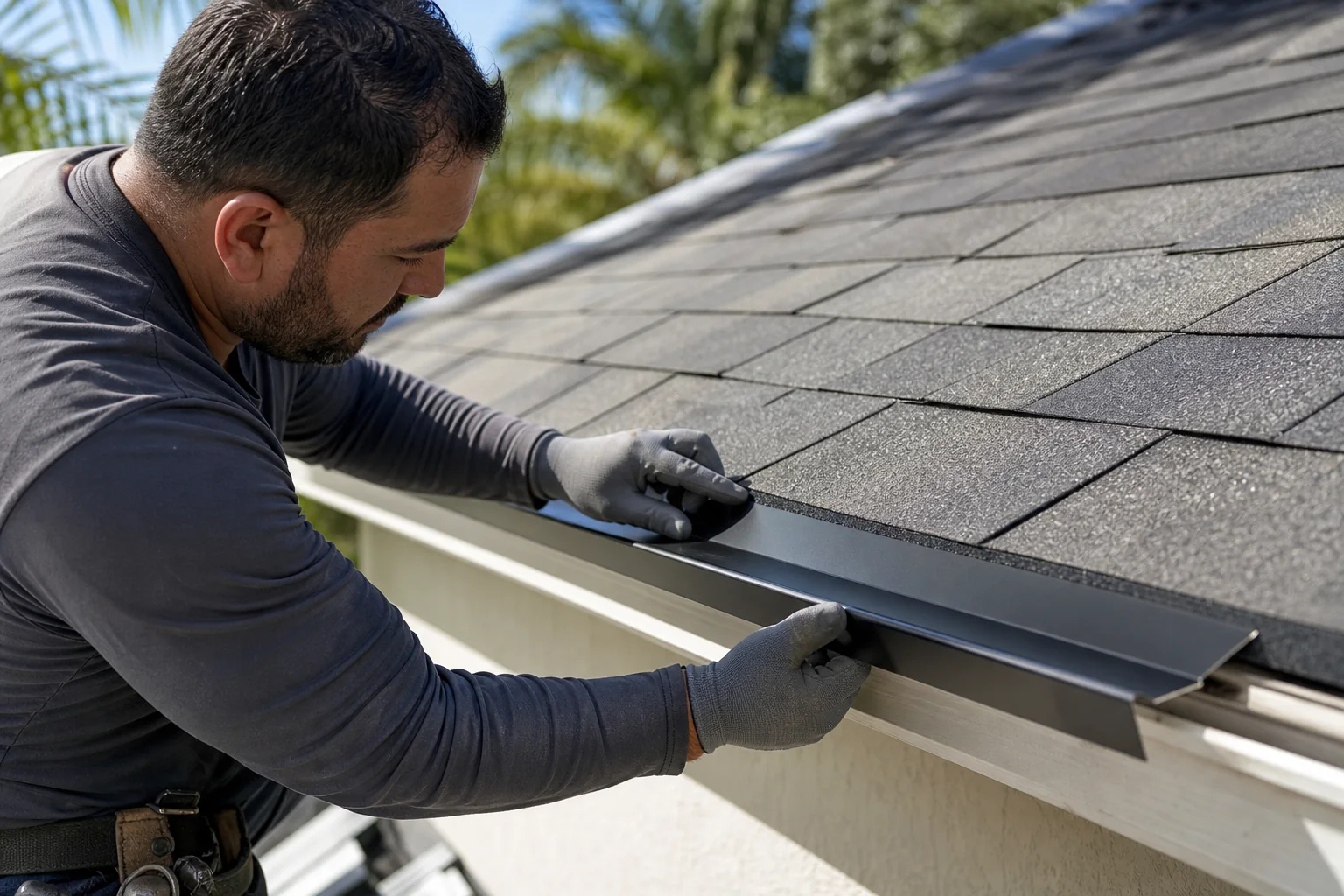
A deck-protection conversation should continue past the field of the roof. Flashing around walls, vents, chimneys, skylights, valleys, eaves, and other transitions needs to work with the protective layers and finished covering. The underlayment cannot be expected to correct an unresolved transition, damaged deck area, or incompatible system detail.
Ask the contractor how those intersections are addressed in the proposed scope. A helpful answer identifies the specific details that matter on your roof and describes the system as an assembly. It does not need to become a homeowner installation lesson; the point is to make the scope legible enough to compare and approve.
This is especially important after a weather event. A search for storm damage restoration in Brandon may begin with visible shingles or an active leak, but a sound recommendation should still trace the concern through the deck, protective layers, flashing, and roof covering before prescribing the permanent work.
Selection Needs a Project-Specific Written Scope
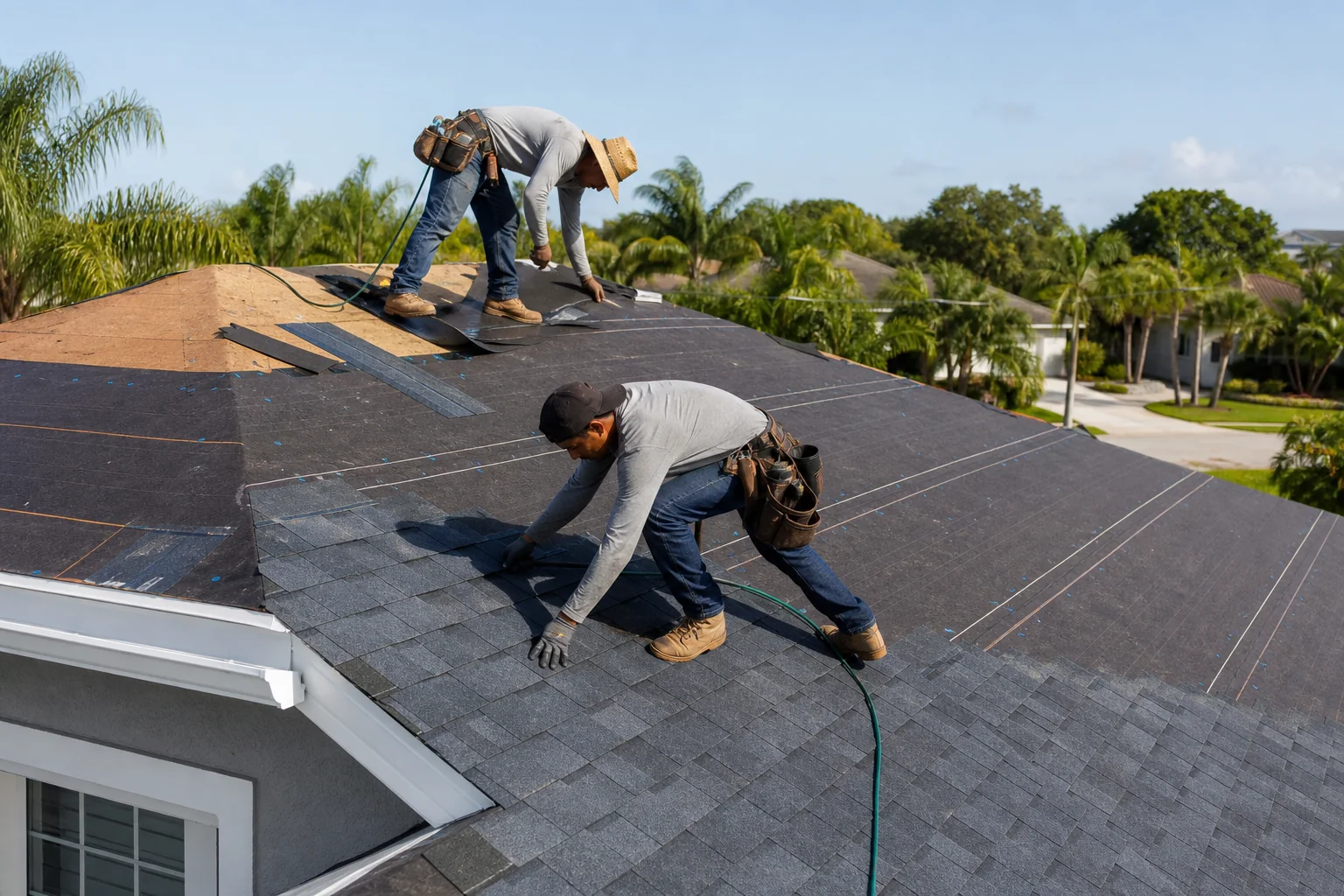
The older articles were right to encourage homeowners to think beyond the shingles. The current decision should go one step further: ask for a project-specific written scope. It should identify the proposed covering, relevant protective layers, deck assumptions, expected flashing or edge details, ventilation considerations, property protection, cleanup, and the process if concealed conditions are found.
Avoid treating an old article’s product names or broad performance language as a specification. Current availability, product requirements, local rules, and the actual roof condition must be confirmed for the project. The contractor should explain why the selected assembly fits the roof rather than asking you to accept a generic package without context.
A clear scope also makes it easier to compare two proposals fairly. If one proposal includes a different deck assumption, water-management layer, flashing detail, or change-order process, that difference should be visible before work starts—not discovered when the roof is already open.
Questions to Ask About Roof Deck Protection
- What deck condition was visible during the evaluation, and what conditions can only be confirmed after the old roof is removed?
- Which current protective layers are included, where will they be used, and how do they fit the selected roofing system?
- How will flashing, roof edges, valleys, penetrations, ventilation, and other transitions connect with those layers?
- How will a damaged or unsuitable deck area be documented, priced, and approved if it is discovered during the work?
- Which current product instructions, permit requirements, and warranty documents apply to the proposed assembly?
Protect the Roof by Understanding the Whole Assembly
Roof deck protection is valuable because it helps turn separate components into a coordinated system. The deck supports the work; the protective layer helps manage water beneath the covering; flashing and transitions direct water where it belongs; and the finished roof ties those decisions together. Looking at the full assembly gives you a stronger basis for a replacement decision than focusing on any one layer alone.
If you are planning a roof project, ask the contractor to walk you through that sequence in plain language and put the relevant details in the written scope. You do not need to become an installer to make a confident choice—you need enough information to understand what the proposed system includes and how it addresses the conditions of your home.
Planning a roof replacement?
Review Your Roofing System With a Clear Scope
Request a free roofing estimate from Affordable Roofing Systems to discuss your roof, its visible conditions, and the system details that should be evaluated before permanent work begins.
Schedule a free roofing estimate