Can I Replace My Own Roof in Tampa Florida?
Owner-builder options exist, but a roof replacement needs a current plan for permits, safety, weather, scope, and accountability...

Table of Contents
- Start With the Decision, Not the Tear-Off
- Confirm Current Permit and Inspection Requirements
- Understand the Owner-Builder Responsibilities Before You Commit
- Evaluate Safety, Weather, and System Knowledge
- Compare the Real Cost, Not Just the Labor Line
- Separate Warranties and Insurance From Sales Promises
- Choose the Level of Help That Matches the Risk
A full roof replacement is one of the largest projects a homeowner can take on. The legacy article opened with a question many Tampa homeowners ask: if an owner-builder path is available, can the homeowner replace the roof personally? In some circumstances, an owner may be allowed to do work on an owner-occupied home. That possibility is not the same as a simple or low-risk project plan.
A roof is a connected system of deck condition, water-control layers, flashing, ventilation, materials, attachment, weather protection, and closeout details. Removing the existing roof exposes the home to changing conditions while the work is underway. The decision therefore involves more than whether someone can purchase shingles or borrow tools; it involves who will plan, perform, supervise, document, and stand behind each part of the work.
This guide preserves the legacy article’s core message while updating its framing: confirm current rules with the appropriate local authority, treat legal and insurance questions as project-specific, and do not let a generic online answer substitute for a safe written plan. It is a homeowner decision guide, not instructions for performing roofing work yourself.
Start With the Decision, Not the Tear-Off
The first question is not whether a homeowner is capable of removing shingles. It is whether the property needs a complete replacement, a targeted repair, temporary protection, or further evaluation before a scope can be chosen. An active leak, a damaged roof opening, or visible storm-related change may need prompt attention, but urgency should lead to protection and assessment—not an improvised permanent project.
The source article linked directly to roof replacement because that scope begins with an evaluation of the existing roof. Before anyone commits to removal, the conversation should identify the observed condition, the proposed materials, the likely work sequence, the home’s vulnerable areas, and the decisions that could change after the old roof is opened.
A clear plan does not guarantee that no hidden condition will be found. It does make space for that possibility. Ask how damaged decking, flashing, ventilation, or moisture-related concerns will be photographed, described, priced, approved, and protected if they are discovered. That is a better starting point than treating a major roofing project as a weekend task.
Confirm Current Permit and Inspection Requirements
The original article correctly treated permits, approvals, and inspections as central to the decision. Requirements can depend on the address, property type, scope, jurisdiction, and the work that is actually proposed. Do not rely on an old article, a neighbor’s experience, or a contractor’s casual assurance as the final answer. Verify the current process with the authority that governs the property before work begins.
For the City of Tampa’s residential roofing information, the legacy guide directed homeowners to Check out this site. Use it as a starting point for current local guidance, then ask the permitting office which application, owner-builder conditions, documents, plan review, and inspection steps apply to your address and planned scope.
An inspection is not merely a final box to check. It is part of how a roof’s deck, dry-in, attachment, transitions, and other required stages may be reviewed. The precise sequence belongs to the local authority and the approved project. A homeowner should know who is responsible for scheduling, access, records, corrections, and final closeout before the tear-off begins.
Understand the Owner-Builder Responsibilities Before You Commit
A homeowner route can carry responsibilities that are easy to overlook when the focus is on saving labor cost. The source raised personal permit appearance, project supervision, final inspection, and employment obligations. Those details can change with current rules and the people involved, so get a written explanation from the permitting authority and seek qualified legal, tax, or insurance guidance when the project involves hired labor or questions about ownership, occupancy, sale, or lease.
The practical question is accountability. If a helper is injured, a weather event interrupts work, a permit correction is required, materials arrive damaged, or a hidden condition expands the scope, who is responsible for the next step? A homeowner should not discover those answers after the roof covering has been removed.
The legacy article also described limits related to selling or leasing after owner-performed work. Because such rules and exemptions are legal and fact-specific, do not treat that old wording as current advice. Ask the relevant authority and a qualified advisor how the present rules apply to your property and intended use.
Questions to Answer Before an Owner-Performed Roof Project
- What current permit, owner-builder, approval, and inspection requirements apply to this exact address and scope?
- Who will be responsible for weather protection, material storage, site safety, cleanup, and any conditions discovered after tear-off?
- What written plan identifies the deck, flashing, ventilation, water-control layers, roofing materials, and final closeout work?
- What professional, legal, tax, insurance, or inspection advice is needed before anyone performs or supervises work?
Evaluate Safety, Weather, and System Knowledge
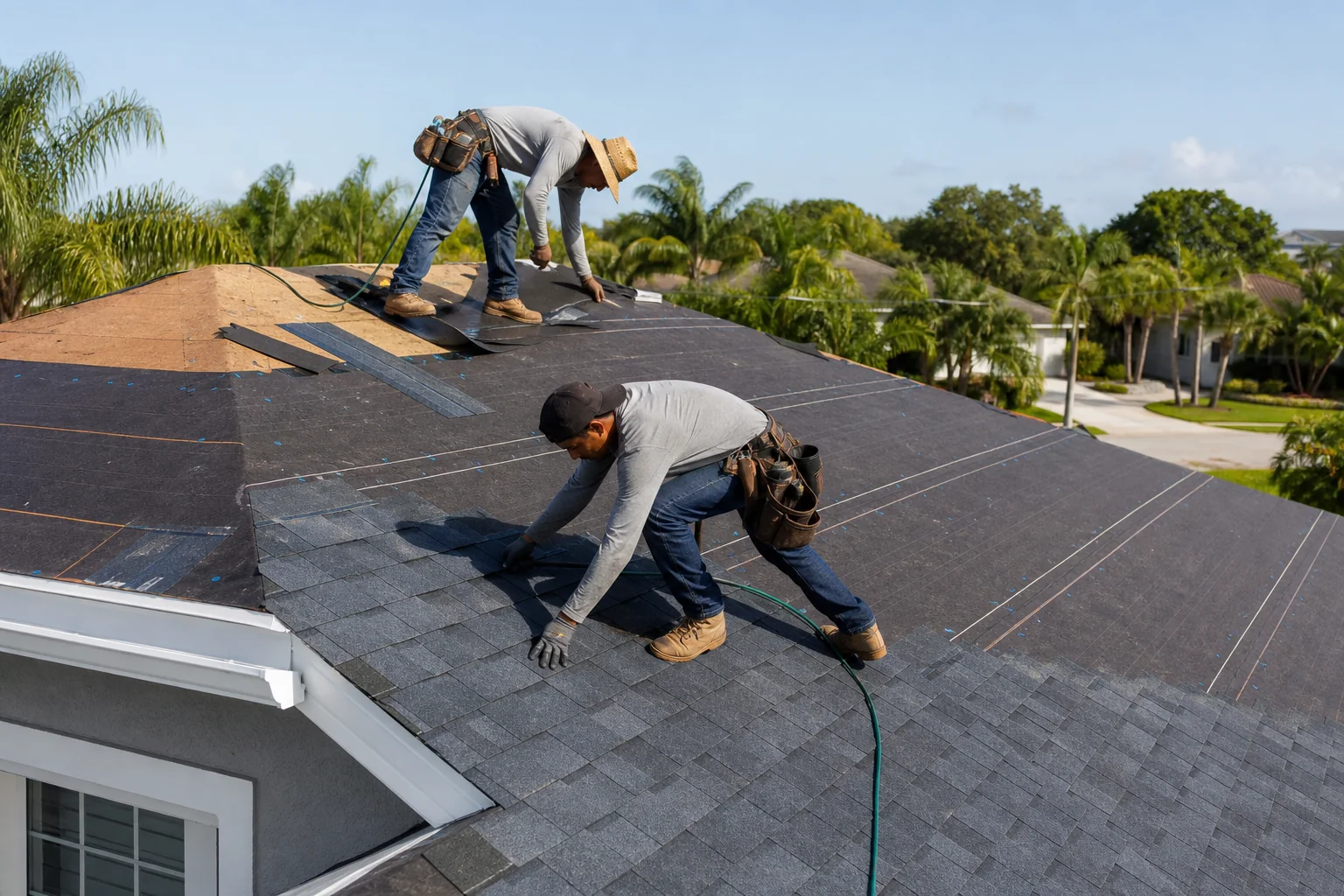
The source emphasized that roof replacement is physically demanding and time-sensitive. That is understated. Roofing work involves fall exposure, changing surfaces, sharp materials, powered equipment, electrical risks, heat, sudden rain, and a home that may be vulnerable between removal and dry-in. A person’s general comfort with home repairs does not automatically prepare them to manage those conditions safely.
Material knowledge matters too. Shingles, underlayment, flashing, ventilation, fasteners, roof edges, wall transitions, valleys, skylights, and penetrations must work together. A product can be appropriate in isolation while still being the wrong component or detail for a particular roof assembly. The homeowner needs a project-specific system plan, not a shopping list of materials.
Weather planning is a separate responsibility. If a project opens the roof and the forecast changes, the team must know how the interior will be protected and how work will resume. Do not assume friends, temporary labor, or a tarp can substitute for a documented weather plan, safe work practices, and the ability to respond without delay.
Compare the Real Cost, Not Just the Labor Line
Do-it-yourself work can appear less expensive when the only comparison is a contractor’s labor line. The legacy article cautioned that tools, materials, rentals, unexpected repairs, delays, disposal, and rework can change that calculation. A complete comparison should include the preparation and protection work that makes a roof system perform, not only the visible top layer.
Ask for a detailed professional scope and compare it against a realistic owner-performed plan. What happens if the deck needs repair? Who manages disposal? What equipment and safety measures are required? How will flashing and ventilation details be handled? What is the cost of a delay caused by rain, a failed inspection, a material mistake, or water entering the home? The useful comparison accounts for those questions before money is committed.
A contractor’s estimate is not automatically the right answer because it costs more. It should, however, explain the work well enough to compare. If an estimate is vague, ask for clarification. A clear proposal should show the conditions observed, the scope included, the assumptions behind the price, and how any change will be documented and approved.
Separate Warranties and Insurance From Sales Promises
The legacy article raised warranty and insurance concerns as reasons to think carefully about a do-it-yourself roof. Those questions deserve their own review. Product warranties, installation warranties, homeowner insurance, contractor coverage, and permit records can each have different terms, conditions, exclusions, and documentation requirements. No one should promise an outcome before the applicable documents and facts are reviewed.
Before choosing a path, ask what documents will be provided for the selected roofing system and what records the homeowner should retain. If an insurer is involved, communicate directly with the insurer about the policy and claim. If a manufacturer warranty matters to the decision, read the actual product and installation terms rather than relying on a broad statement that a roof will be covered.
For current local inspection information, the source also invited readers to Click here. Confirm details directly with the City of Tampa or the authority that governs your property, because the correct process depends on the location and work being proposed.
Choose the Level of Help That Matches the Risk
The answer to the title question is not simply yes or no. A homeowner may have options under current local rules, but a roof replacement has consequences that extend beyond the day of installation. The safest decision is the one supported by a current permit plan, an appropriate scope, reliable supervision, weather protection, documented materials, and clear responsibility for the work.
For many homes, that means working with an experienced roofing professional who can evaluate the roof, explain the conditions found, and provide a written replacement plan. The goal is not to remove the homeowner from the decision. It is to give the homeowner enough information to make the decision before the project becomes difficult to reverse.
Considering a roof replacement?
Start With a Clear Roof Replacement Scope
Request a free roofing estimate from Affordable Roofing Systems to review the condition of your roof, discuss the replacement approach, and understand the next step before work begins.
Schedule a free roofing estimate