
Common Signs of Roof Damage Homeowners Shouldn’t Ignore
Learn which visible and less-obvious roof changes deserve attention, what to document safely, and when to schedule an evaluation...
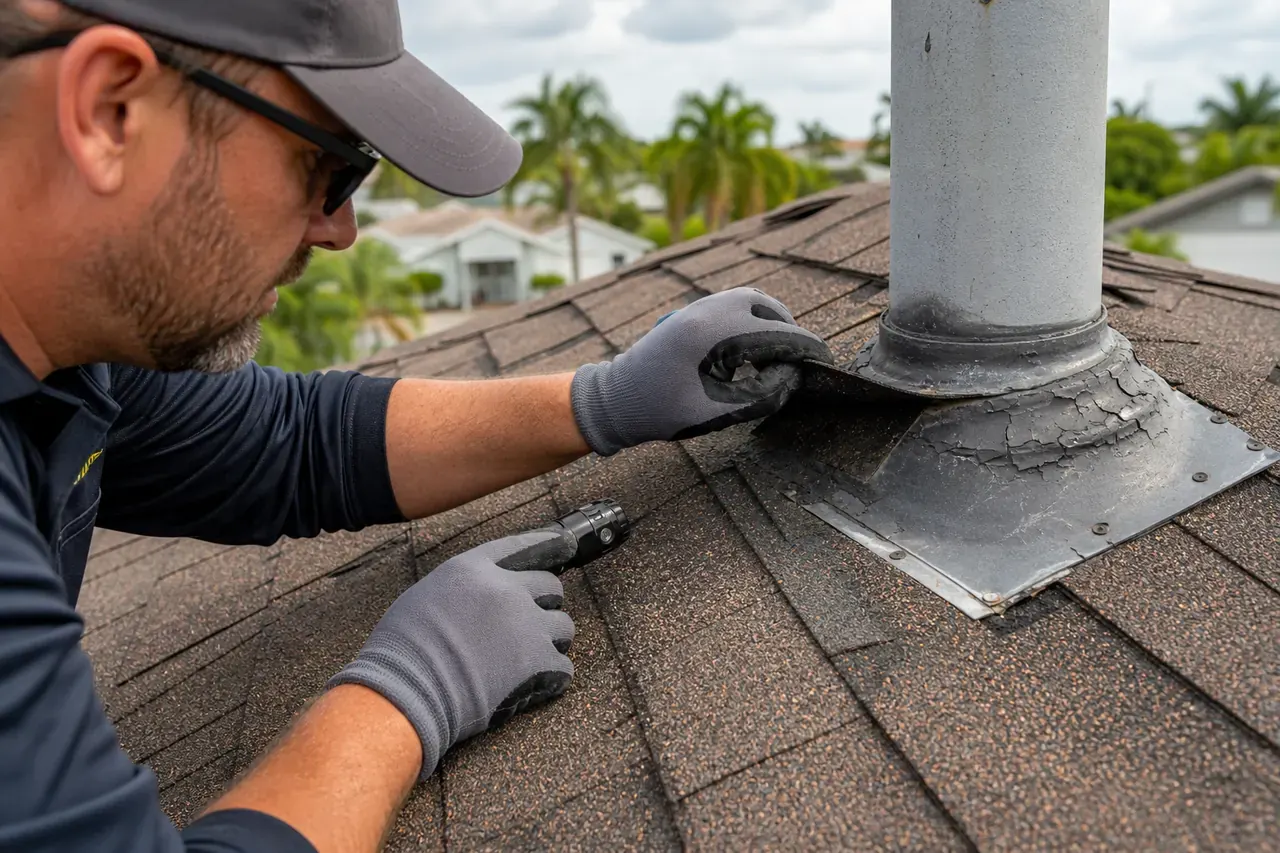
Table of Contents
- Start With a Pattern, Not a Diagnosis
- Roof-Covering Changes You Can See Safely
- Dark Areas and Surface Changes Need Context
- Interior and Attic Clues Need a Full Water-Path Review
- Drainage, Roof Edges, and Exterior Walls
- Roof Materials Can Show Damage Differently
- What to Do After a Storm or Sudden Change
- An Evaluation Should Explain the Next Step
Roof damage is not always dramatic. A missing shingle after a storm is easy to recognize, but a dark area, a small change at a vent pipe, a water stain, or debris holding moisture at the roof edge can be easier to dismiss. The useful question is not whether a single symptom proves a major roof failure. It is whether the change is new, spreading, related to weather or another event, or part of a pattern that needs a closer look.
The four legacy articles consolidated here covered visible storm damage, shingle bruising, roof and attic leaks, black spots, and damaged plumbing vent boots. Together, they support a safer approach: observe from the ground or indoors, document what changed, and have the full roof system evaluated before deciding what caused it or how to repair it.
This guide organizes the most useful signs by what a homeowner may see, where the symptom appears, and what it can reasonably tell you. It does not ask you to walk a roof, pry up materials, or make a do-it-yourself diagnosis.
Start With a Pattern, Not a Diagnosis
A roof symptom can have more than one source. Water may travel along framing before appearing on a ceiling. A dark mark on a shingle may be surface staining, algae, wear, or impact-related damage. A higher utility bill may involve the attic, insulation, HVAC equipment, windows, habits inside the home, or more than one condition. Looking for a pattern keeps a homeowner from treating a clue as a conclusion.
Make a note of when the change appeared, whether it follows wind-driven rain, whether it is growing, and whether there was a recent storm, repair, tree strike, plumbing issue, or exterior work. Photos from the ground and inside the home can be useful. When a condition needs confirmation, a professional roof inspection can connect the visible symptom with the roof covering, flashing, attic, drainage path, and interior rather than focusing on only one surface.
Roof-Covering Changes You Can See Safely
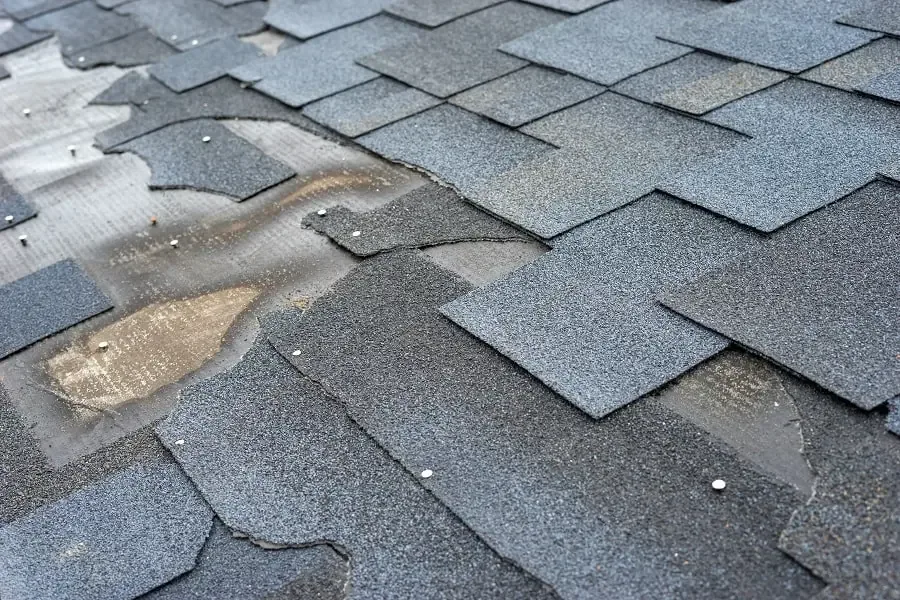
From the ground, you may be able to see shingles that are missing, lifted, curled, cracked, split, buckled, or visibly displaced. A section that looks different after high wind or a storm deserves attention. If shingles or tiles are on the ground, they may not necessarily have come from your roof, but they are a reason to look for changed areas safely with binoculars rather than stepping onto the roof.
Granules are the mineral-coated surface of asphalt shingles. Finding a small amount of loose material can happen as a roof ages, and one gutter observation does not establish the roof's remaining life. A larger amount of granules together with bald areas, dark exposed asphalt, new damage after a storm, or visibly worn shingles provides a stronger reason for an evaluation.
Impact can look different on different materials. A shingle may show a localized mark or granule loss, a wood shingle may split, a tile may crack, and metal may dent without automatically becoming a leak. Our hail versus wind damage guide explains why the timing, material, and condition need to be considered together.
Dark Areas and Surface Changes Need Context
Black streaks or dark spots on a roof can be unsettling, but appearance alone does not tell you whether the roof is leaking or structurally damaged. In Florida's warm, humid conditions, algae and moisture-retaining debris can contribute to visible staining. Leaves and branches may also hold moisture against the roof surface or block the route water needs to take off the roof.
Look for the wider condition. Is the dark area isolated or expanding? Is debris collecting in valleys, behind a chimney, or at the gutter line? Is a roof surface visibly worn, soft-looking, or changing after a storm? Avoid treating it with high-pressure equipment or harsh methods before confirming what the material manufacturer and roof professional recommend. Cleaning that damages the surface can create a separate problem.
A surface observation is useful when it leads to the right question: what is causing the moisture, staining, or material change, and is the roof still shedding water as intended?
Interior and Attic Clues Need a Full Water-Path Review
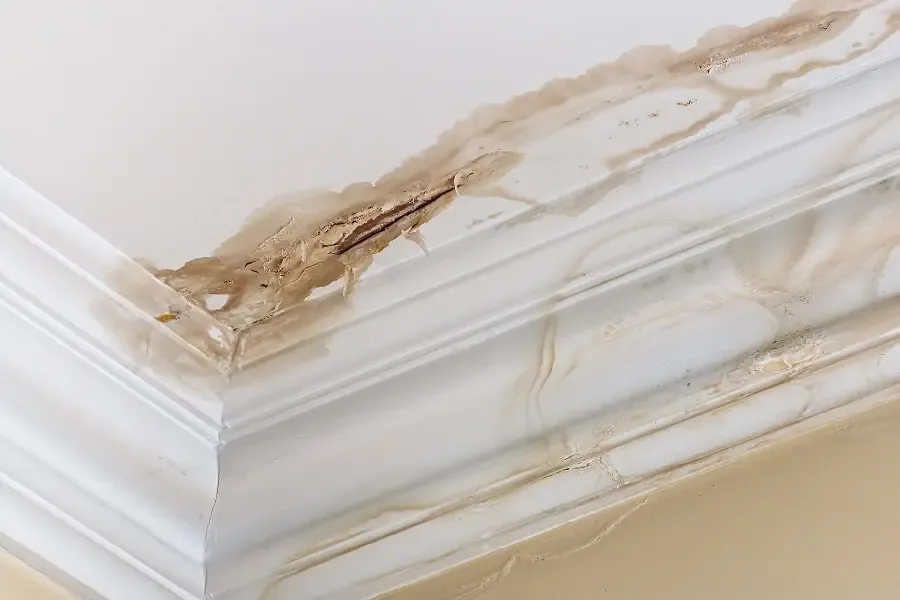
Water stains, peeling paint, damp drywall, wet insulation, a musty attic odor, visible drips, or moisture around a ceiling opening are all reasons to investigate. They do not prove that the roof directly above the stain is the source. Water can travel along framing, and the cause may involve a roof detail, flashing, a plumbing vent, condensation, ductwork, a wall transition, or more than one condition.
A damaged plumbing vent boot is one specific roof detail worth evaluating. The boot and flashing around a vent pipe can age, crack, separate, or lose a fastener, creating a water path near the penetration. That is different from assuming every attic drip comes from the same component. The surrounding shingles, flashing, attic, and interior evidence need to be reviewed together.
If water is active, protect belongings and contain drips only when it is safe to do so. Keep clear of electrical fixtures, do not enter an unsafe attic, and avoid a wet-roof inspection. Our roof leak detection guide offers a fuller framework for recording what you see before an evaluation.
Drainage, Roof Edges, and Exterior Walls
Gutters, downspouts, valleys, roof edges, and wall transitions guide water away from the roof and home. When leaves, branches, or other debris block that path, water can overflow, back up near the roof edge, wet fascia or soffit materials, and make a vulnerable detail harder to spot. Mold or mildew where the roof meets an exterior wall is also a reason to check the water-management path rather than simply cleaning the visible growth.
Overhanging branches can add debris, rub the roof surface, and become impact hazards in wind. Wildlife can use a branch as access to an existing weak point, but homeowners should not try to seal an active entry point from the roof surface without understanding what has been disturbed. The roof edge, decking, coverings, ventilation openings, and animal issue may need different qualified professionals.
Safe, routine roof maintenance helps identify debris, drainage, flashing, and edge conditions before they contribute to water intrusion.

Roof Materials Can Show Damage Differently
Roof damage is not one visual language. Asphalt shingles may show cracking, lifting, granule loss, or displaced courses. Tile can show hairline cracks, chipped edges, or broken pieces. Metal can dent, develop a concern at a fastener or flashing, or show corrosion that needs assessment. Low-slope membranes have their own seams, penetrations, drains, and surface conditions to examine.
That is why one material-specific symptom should not be applied broadly to every roof type. A dent does not automatically mean a metal roof leaks; a dark shingle does not by itself mean a shingle needs replacement; and a small tile crack can require a different response from a membrane puncture. If a proposal or inspection report uses unfamiliar terms, the roofing glossary can help you ask what the observation means for the specific material and roof detail.
What to Do After a Storm or Sudden Change
After strong wind, hail, heavy rain, falling branches, or another sudden event, start with safety. Look for displaced materials from the ground, check interior ceilings and attic-access areas only when safe, take time-stamped photos, and note the event and when you first noticed the condition. Do not climb on a wet roof, pull at a loose shingle, or use a temporary patch as a permanent diagnosis.
If water is entering the home or a roof opening creates an immediate risk, seek timely help. For less urgent but concerning changes, an evaluation can determine whether the condition relates to a roof repair, a drainage issue, a storm claim, or monitoring. Our storm damage restoration page explains the service path for storm-related roof concerns without assuming that every visible change needs the same treatment.
Signs That Deserve a Prompt Evaluation
- Active water entry, a ceiling bulge, a new interior drip, or moisture near electrical fixtures.
- Clusters of missing, lifted, split, cracked, or displaced roofing materials after a storm or high wind.
- A sudden change in the roof surface, a large amount of granules with bald areas, or material fragments on the ground.
- Recurring stains, damp attic materials, visible mold or mildew, or an odor that appears after rain.
- Sagging, a soft-looking roof area, recurring ponding, or a roof condition that changes after work by another trade.
An Evaluation Should Explain the Next Step
The goal of noticing roof damage early is not to assume the worst or to turn every symptom into a replacement. It is to find the source before a small condition becomes a larger water, material, or interior problem. A clear evaluation should explain what was observed, what cannot be determined from the ground, which parts of the roof system were reviewed, and why a repair, maintenance step, further investigation, or replacement discussion is appropriate.
When the surrounding roof still has useful life, targeted roof repair may resolve the specific water path or damaged detail. When the condition is broader, the same evaluation provides the information needed for a more informed next decision.
Noticing a roof change?
Get Clarity on What Your Roof Needs
Request a free roofing estimate from Affordable Roofing Systems to discuss the signs you have noticed, evaluate the roof system, and identify the right next step for your home.
Schedule a free roof inspection