Is it Possible to Install Metal Roofing Over a Shingle Roof?
Metal can go over shingles in some cases, but Affordable Roofing Systems does not recommend or offer the roof-over approach...

Table of Contents
- The Short Answer: Possible, but Not the Method We Recommend
- Why a Roof-Over Can Look Appealing
- What Existing Shingles Can Hide
- Underlayment, Furring Strips, and Added Layers Need Careful Evaluation
- A Clean Deck Supports a Better Metal Roofing System
- Metal Roofing Is Still Worth Considering on Its Own Merits
- Compare Costs as a Long-Term Ownership Decision
- Common Questions About Metal Over Shingles
- Choose a Complete Replacement Plan, Not a Shortcut
A homeowner considering metal after shingles usually has a practical question in mind: can the new material simply go on top of the old roof? The answer is that a roof-over can be technically possible in some circumstances. It may appear faster, less disruptive, and less expensive because it avoids a tear-off. Those apparent advantages are why the question comes up so often.
Affordable Roofing Systems does not recommend or offer installing metal over existing asphalt shingles. The legacy article took that same position: a shortcut can limit the inspection of the roof below, leave moisture-related conditions unresolved, and compromise the long-term performance a homeowner expects from a new system. A replacement is a chance to understand and correct the assembly—not merely cover it.
This guide keeps the source article’s central conclusion while explaining the decision in a clearer order. It is not a do-it-yourself installation guide. The right system, details, and local requirements must be evaluated by a qualified roofing professional for the particular home.
The Short Answer: Possible, but Not the Method We Recommend
A roof-over means placing a new roofing system over an existing shingle covering rather than removing that covering first. Some contractors use versions of that approach, sometimes with additional framing or separation materials. Whether it is allowed, appropriate, or durable depends on the roof’s existing layers, structure, condition, manufacturer requirements, permit requirements, and the proposed system. A generic online answer cannot settle those questions.
For Affordable Roofing Systems, the better starting point is a complete replacement evaluation. A new metal roof is a system of deck preparation, water-control layers, flashing, ventilation, fastening, transitions, panels, and finishing details. Beginning from a clean, inspected surface gives the contractor a better basis for each of those decisions.
That recommendation is not a claim that every older shingle roof is failing. It is a decision about what can be verified and what the new roof needs in order to perform as intended. When a homeowner is making a major material upgrade, clarity at the start is usually more valuable than a shortcut that leaves key layers unseen.
Why a Roof-Over Can Look Appealing
The original article acknowledged the appeal of a roof-over: avoiding a tear-off can seem faster and less disruptive, and it can reduce the visible disposal work at the beginning of a project. Metal itself also has qualities homeowners value—durability, a wide range of panel and shingle-style options, low routine maintenance, and the potential for a long service life when the system is properly designed and installed.
Those are valid reasons to explore metal roofing. They are not, however, reasons to assume the old shingle roof should remain underneath it. The material decision and the installation-path decision are separate. A homeowner can choose metal because it fits the home’s long-term goals while still choosing a full tear-off so the new system begins with a known substrate.
A written proposal should make that distinction clear. Compare the scope of removal, deck evaluation, replacement of deteriorated materials when needed, water-control layers, flashing, ventilation, panel details, and closeout—not only the top-line product name or the number of days on the schedule.
What Existing Shingles Can Hide
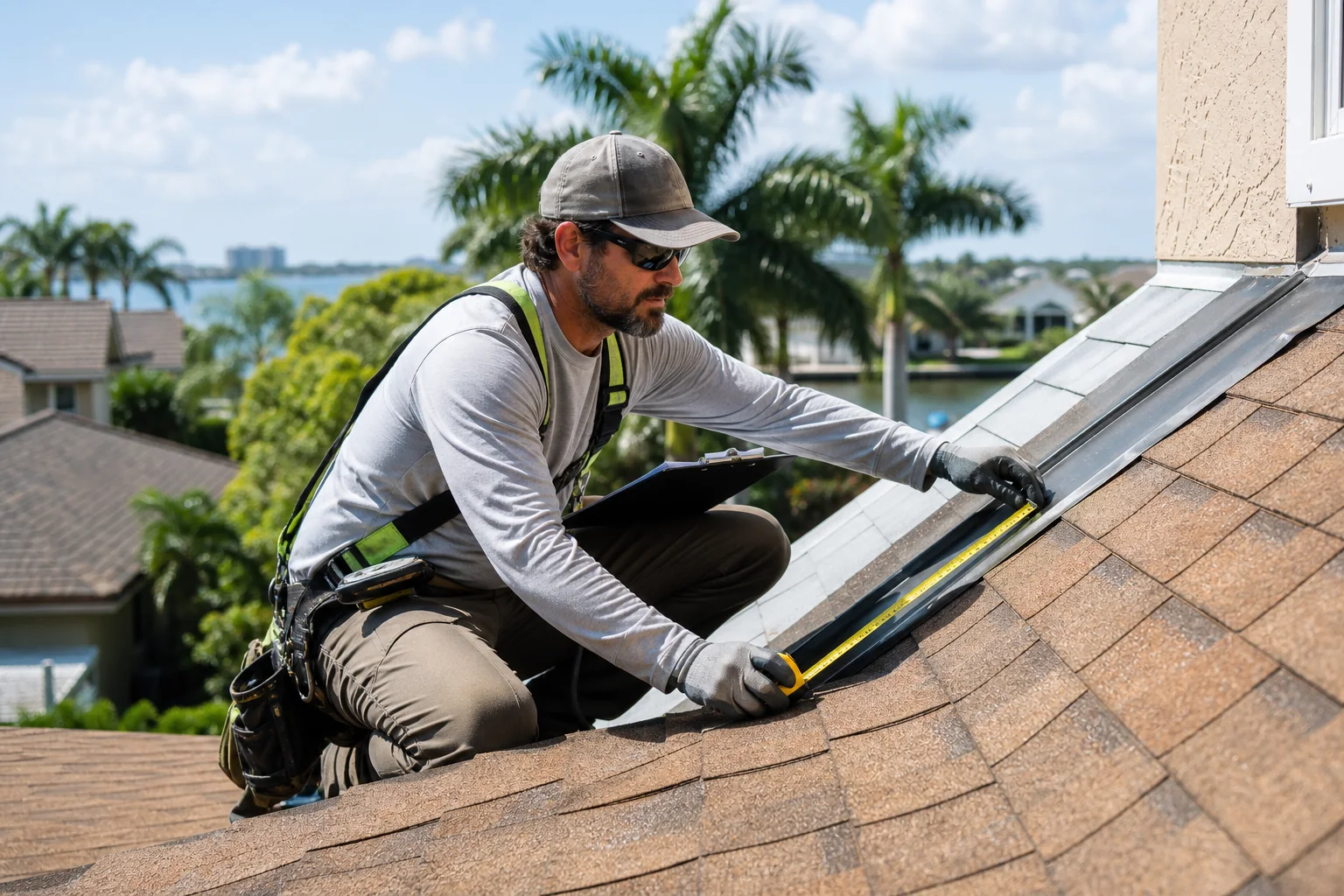
One of the legacy article’s strongest points is also the simplest: leaving the old roof in place limits what can be inspected. A contractor may be unable to fully evaluate the roof deck, earlier repairs, water entry paths, flashing conditions, or deteriorated areas beneath the existing covering. Some conditions are not visible until the old material is removed.
That matters because a metal roof should not be asked to conceal an unresolved substrate problem. If the deck has soft or damaged areas, if prior moisture reached a vulnerable detail, or if a flashing transition needs correction, those findings should inform the scope before new metal panels cover the area. A clean deck gives the project a traceable starting point rather than leaving assumptions under a new finish.
The inspection also helps the team confirm how the new system will handle penetrations, walls, valleys, edges, skylights, vents, and other transitions. These are not secondary details. They are part of how a roof sheds water and how the completed system is documented for the homeowner.
Underlayment, Furring Strips, and Added Layers Need Careful Evaluation
The source article notes that roof-over methods may involve new underlayment, furring strips, added fasteners, and finishing details. Those components are not a universal fix for every existing shingle roof. They can change the roof’s thickness, weight, drainage geometry, attachment approach, edge details, and the way the new material interacts with the older surface.
Additional layers can also make it harder to confirm the condition of the deck and prior water-control materials. The legacy guidance specifically cautioned that a roof-over can prevent installation of needed protective layers and can introduce moisture concerns. The exact components appropriate for a replacement should follow the selected system, the roof’s condition, current requirements, and the manufacturer’s instructions—not a one-size-fits-all recipe.
For the same reason, this article does not prescribe panel spacing, fastening, underlayment, or a direct-to-plywood method. Those details are installation work, not homeowner homework. The contractor should explain the system they propose, why it fits the property, and what is being removed or repaired before installation begins.
A Clean Deck Supports a Better Metal Roofing System
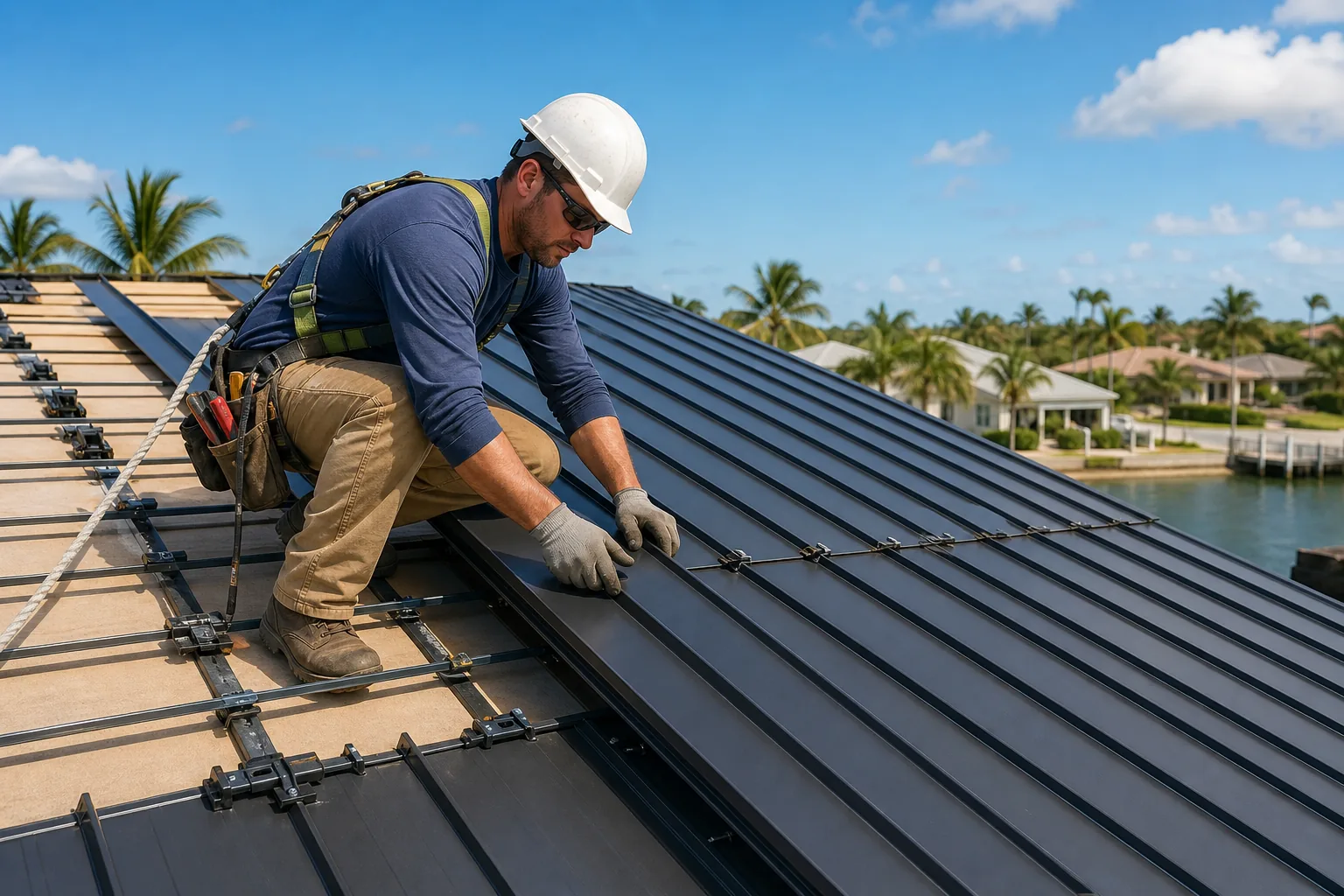
Removing existing shingles creates the opportunity to inspect the surface that will support the new roof. The team can identify visible deck concerns, address appropriate repairs, prepare the surface, and install the selected layers in the order required by the project. That is the central practical reason Affordable Roofing Systems prefers a full replacement rather than an overlay.
It also creates a cleaner basis for the new roof’s edges and transitions. Proper flashing around vents, walls, chimneys, skylights, and roof-to-wall connections needs to integrate with the system rather than accommodate a stack of unknown old layers. The finished roof can then be evaluated as one assembly, with a clearer record of the materials and work below the panels.
A full tear-off may involve more planning and disposal than a roof-over, but the purpose is not to add work for its own sake. It is to avoid burying a condition that could reduce roof life, complicate a future repair, or leave the homeowner uncertain about what is under the new roof.
Metal Roofing Is Still Worth Considering on Its Own Merits
Choosing against a roof-over is not choosing against metal. Metal roofing can be a strong long-term option when the material, profile, design, attachment, and full system are selected for the home. Homeowners often consider its longevity, durability, design choices, and potential energy benefits alongside the home’s architecture, budget, and expected ownership horizon.
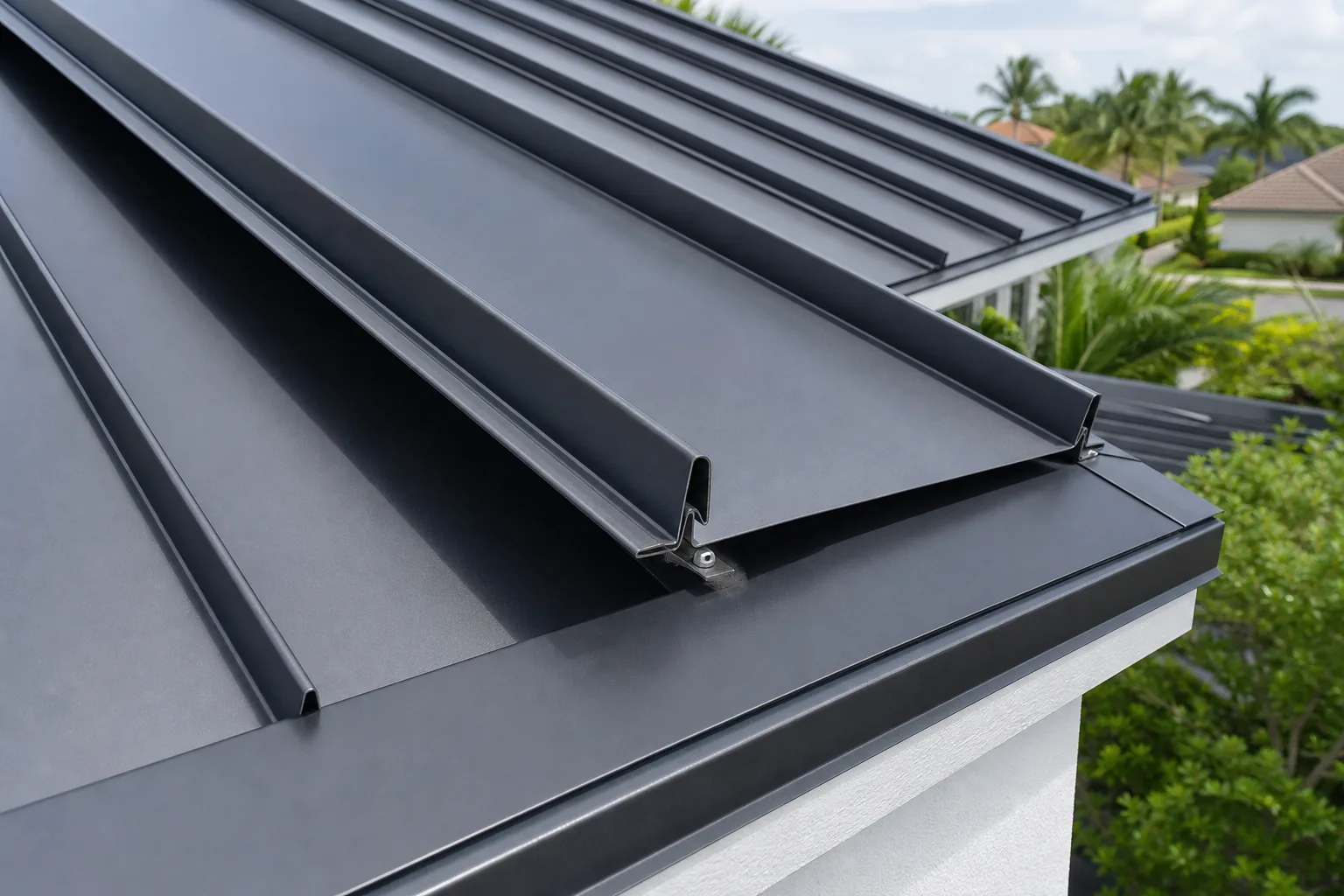
Different metal systems have different appearances and construction needs. Standing seam panels, metal shingles, and other profiles can create different visual and performance considerations. The right choice should be discussed as a complete system; panel style, coating, fastener approach, flashing, expansion movement, roof shape, ventilation, and local conditions all matter.
The original article contrasted metal’s longer potential service life with the lower initial cost of shingles. That comparison remains useful when it is kept honest: no roof material has one guaranteed lifespan, and a roof’s value depends on the quality of the installed system, the home’s conditions, upkeep, and the scope that was actually completed.
Compare Costs as a Long-Term Ownership Decision
A metal roof commonly has a higher initial cost than asphalt shingles, so a meaningful comparison should look beyond the first invoice. Consider the roof’s existing condition, removal and disposal, needed deck or detail repairs, the selected metal system, the expected ownership period, maintenance expectations, and how the proposal protects the home during the work. A low price that excludes needed preparation is not automatically the better long-term value.
The legacy article rightly treated metal as a long-term decision and noted that energy savings may add up over time. Those results vary by roof design, color, attic, insulation, ventilation, climate, household use, and the final installed system. A contractor should not promise a particular utility saving or payback period without a project-specific basis.
Use the current Metal roofing costs guide as an additional planning resource when it is available. The most useful estimate will still be the written scope for the actual property, including what happens if concealed conditions are found after removal.
Questions to Ask Before Choosing Metal Over Shingles
- Will the existing shingles be removed so the deck and prior conditions can be evaluated?
- What deck, flashing, edge, ventilation, and water-control work is included in the written scope?
- How will the selected metal system be attached and detailed for this roof’s shape and penetrations?
- What conditions could require additional work after the existing shingles are removed, and how will approval be documented?
- What project-specific manufacturer, permit, and warranty requirements apply to the proposed system?
Common Questions About Metal Over Shingles
Can a metal roof go over three layers of shingles?
Do not assume that additional layers are acceptable. Layer limits and permit requirements are project- and jurisdiction-specific. A professional should confirm the existing roof assembly and the applicable requirements before proposing a replacement approach.
Can metal go directly on plywood?
A metal roofing system should follow its approved assembly and manufacturer instructions. The legacy article emphasized a separation and water-control layer rather than placing metal directly against the wood. The contractor should specify the correct layers for the selected system rather than relying on a generic online detail.
Does a thinner 29-gauge panel have a fixed lifespan?
No single gauge number can predict a roof’s lifespan by itself. Panel thickness, metal type, coating, profile, attachment, expansion details, environment, maintenance, and the complete system all affect performance. Compare the proposed product and written warranty rather than making a decision from gauge alone.
Choose a Complete Replacement Plan, Not a Shortcut
The conclusion of the original article remains the right one for this company: removing the old shingles and starting with a clean surface is generally the preferred path for a metal roof replacement. It supports proper inspection, repairs when needed, a clearer installation plan, and a complete system that is easier to understand and maintain.
If you are weighing shingles against metal, ask for an evaluation of the roof you actually have—not only a faster way to cover it. A clear scope will help you compare material options, preparation work, expected project steps, and the long-term implications of the decision with fewer assumptions.
Considering a metal roof?
Plan Your Metal Roof Replacement With a Clear Scope
Request a free roofing estimate from Affordable Roofing Systems to review your existing roof, material options, and the replacement approach that fits your home.
Schedule a free roofing estimate