
Most Common Causes of a Leaky Roof
Learn where roof leaks commonly begin, how to read the warning signs, and what to do before a small water issue becomes a larger repair...

Table of Contents
- The Details Where Water Commonly Gets In
- Changes in the Roof Covering Matter
- Water Needs a Clear Route Off the Roof
- Interior Clues Do Not Identify the Cause by Themselves
- Storms, Impact, and Nature Can Change Conditions Quickly
- Flat and Metal Roofs Have Their Own Leak Paths
- Know When Normal Aging Becomes a Warning Sign
- What to Do When You Notice a Leak
A water spot rarely tells the full story. The visible stain may sit several feet away from the point where water entered, and one symptom can have more than one possible source. A roof leak can begin at a transition, a penetration, a worn roof covering, a drainage issue, storm damage, or an attic condition that needs a closer look.
The six legacy articles behind this guide covered leak causes, roof aging, granule loss, drainage, storms, and common roof problems. Read together, they support a more useful approach: notice the pattern, protect the interior if water is active, and identify the actual source before choosing a repair.
The Details Where Water Commonly Gets In
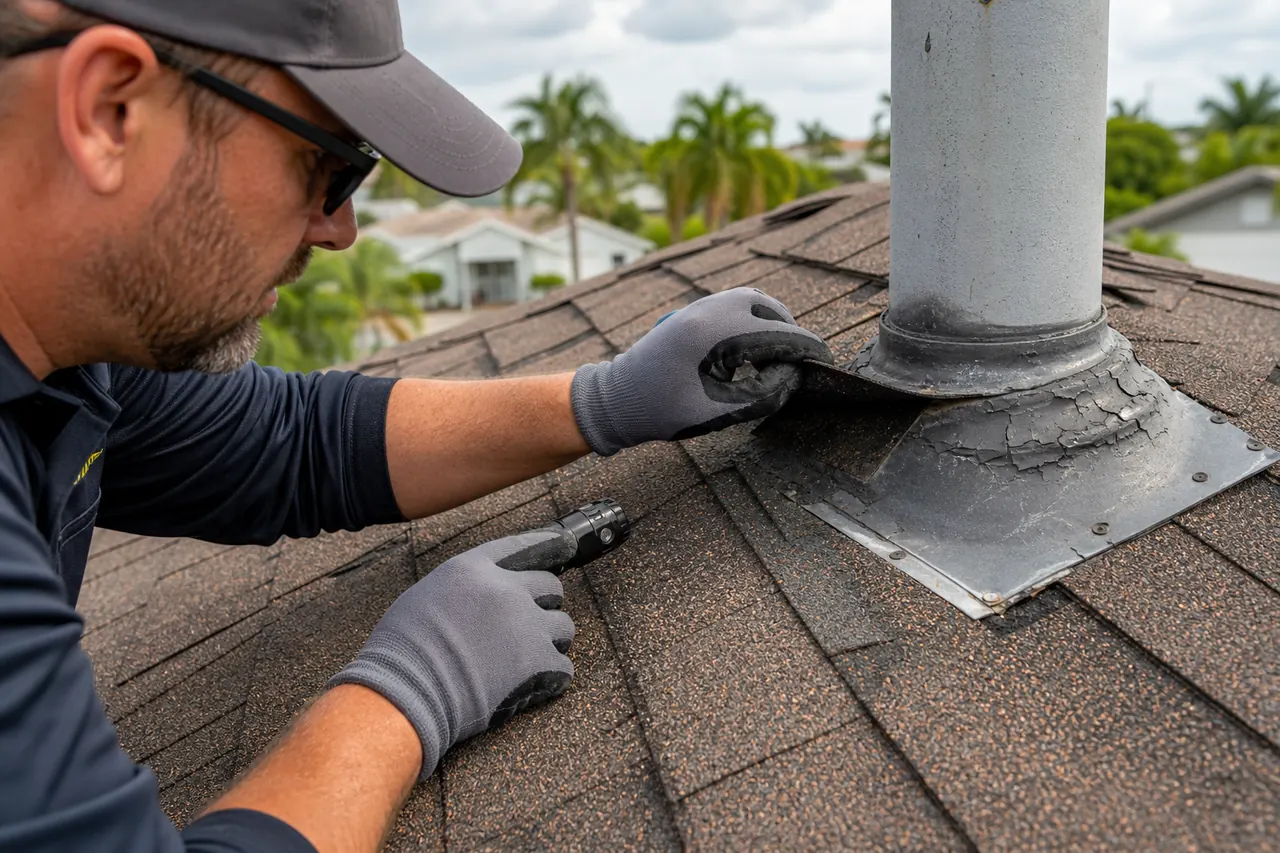
The roof field gets most of the attention, but many leaks start where the roof changes direction or meets another material. Valleys, roof-to-wall transitions, chimneys, skylights, plumbing vents, exhaust vents, and edges all need a system of flashing, compatible materials, and careful installation to move water away.
Sealant can be part of a detail, but it is not a substitute for sound flashing and water-shedding design. Aging sealant, movement at a joint, damaged flashing, or a repair that used incompatible materials can create an entry point even when the surrounding shingles still look serviceable from the ground.
Flashing, Penetrations, and Transitions
Look for a pattern rather than trying to diagnose the material from indoors. A stain that grows after wind-driven rain, staining near a chimney or wall, a wet area around a vent pipe, or a leak that returns after a cosmetic patch are all reasons to investigate the roof detail above it. A professional roof inspection can trace the condition through the roof covering, flashing, attic, and interior rather than assuming that a visible stain identifies one failed part.
Fasteners matter too. A fastener that is misplaced, overdriven, backed out, or left exposed can create a path for water. These details should be addressed as a system because a repair that only covers the symptom can leave the original water path in place.
Skylights, Roof Vents, and Chimneys
A leak near a skylight or roof vent does not automatically mean that fixture itself has failed. The surrounding flashing, the roof covering above it, a cracked component, or a nearby transition can all be involved. Chimneys have their own details to review, including the cap, masonry, mortar, and flashing around the base.
If the issue is near a skylight, our skylight leak repair guide can help you organize what to note before an evaluation. The important point is to inspect the full water path, not only the opening closest to the stain.
Changes in the Roof Covering Matter
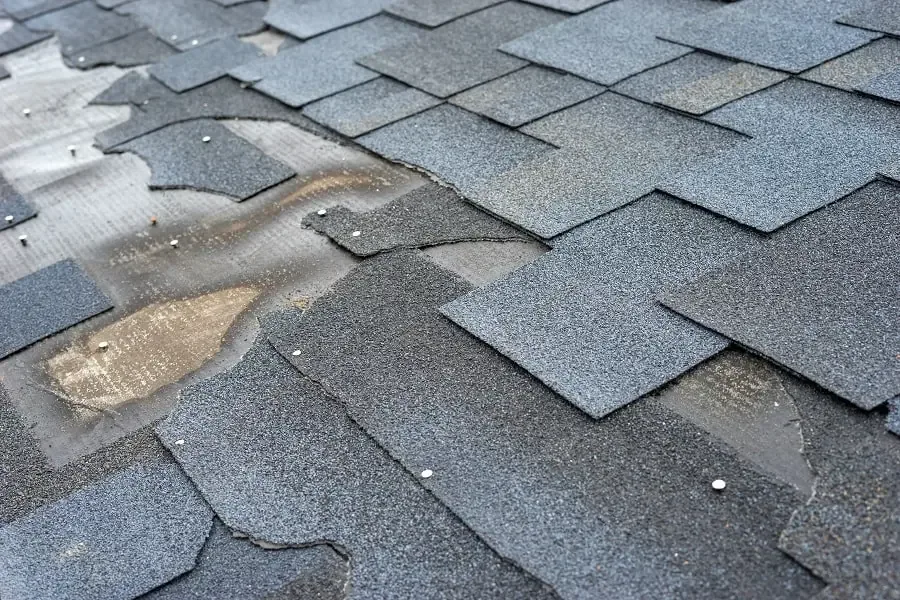
Broken, missing, lifted, cracked, buckled, or displaced shingles and tiles are easier to notice than a hidden flashing issue, but they still need context. A storm can remove or loosen materials. Age, heat, poor installation, foot traffic, or prior repairs can also affect the roof’s ability to shed water. Different-colored patches, pieces of roofing material on the ground, or a sudden change after a storm are worth documenting.
Asphalt shingles also lose granules over time. A small amount of loose granules after a new installation may occur, and gradual wear is different from widespread bald areas, exposed asphalt, or a large amount of granules appearing after severe weather. Granule loss is a reason to look at the whole shingle condition, not a standalone diagnosis.
Signs That Deserve a Closer Look
- A cluster of missing, lifted, curled, split, or visibly cracked shingles rather than one minor cosmetic variation.
- Granules collecting in gutters or at downspouts together with bald spots, exposed asphalt, or signs of weather impact.
- Buckling, deep cracks, or shingle movement that may relate to the roof deck, ventilation, installation, or a damaged roof covering.
- A roof change that appears soon after a storm, a repair, HVAC work, or another event that may have affected the surface.
Water Needs a Clear Route Off the Roof
Roofs and drainage components work together. Gutters and downspouts are meant to collect and direct water away from the roof edge and home. When debris blocks that route, water can back up, overflow, wet fascia or soffit materials, and make an existing weak point harder to spot. Valleys and low areas need the same attention because they receive water from more than one roof plane.
Overhanging branches can add leaves and debris, scrape a roof surface, and increase the chance of impact during high wind. Safe, regular roof maintenance helps identify drainage and edge conditions before they contribute to a leak. It should not require a homeowner to walk a roof or reach into a dangerous area.
Pooling Water, Slope, and Material Compatibility
The roof covering must suit the roof’s slope and drainage design. A material that performs well on a steep slope may not be appropriate for a low-slope area, and a roof system with a ponding or drainage concern needs a source-specific evaluation. On low-slope roofs, punctures and standing water can be especially important because water does not leave the surface as quickly.
A sagging area, recurring ponding, or water collecting where it did not before should not be covered over without finding out why the condition developed. The answer may involve drainage, a surface repair, the roof deck, or another part of the assembly.
Interior Clues Do Not Identify the Cause by Themselves
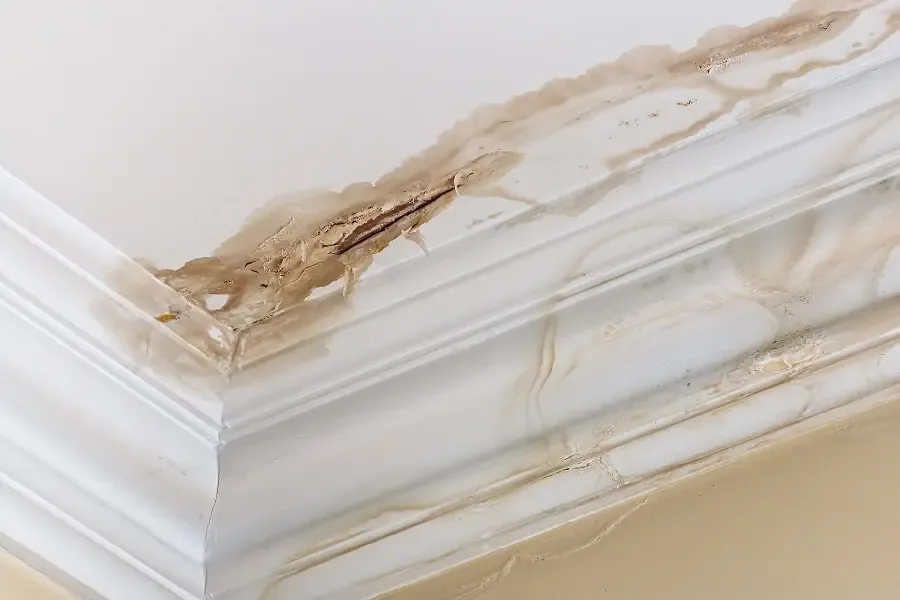
Ceiling stains, peeling paint, damp insulation, wet roof decking, a musty attic odor, or mold and mildew can all signal a moisture problem. A ceiling stain does not prove that the roof directly above it is leaking. Water can travel along framing, and the condition may also involve plumbing, ductwork, a wall detail, attic condensation, or more than one source.
Poor attic ventilation can contribute to condensation, but it is not a shortcut explanation for every moisture symptom. Before adding vents or treating a stain as a surface issue, review the roof, attic, insulation, airflow path, and any recent interior or exterior changes. Our roof ventilation guide explains why the right solution starts with the whole attic and roof assembly.
Storms, Impact, and Nature Can Change Conditions Quickly
In Tampa Bay, heavy rain, wind, and occasional hail can expose an existing weak point or create a new one. Wind can lift roof-covering materials and stress flashing. Hail and falling debris can leave punctures or surface damage. A branch can break a shingle or tile, while pests and birds can enlarge a pre-existing opening or disturb a vulnerable edge.
After a storm, prioritize safety and visible changes over a do-it-yourself roof walk. Photos from the ground, the timing of the symptom, and any interior changes can help an evaluator compare the condition with our storm damage repair signs and determine the appropriate next step.
Flat and Metal Roofs Have Their Own Leak Paths
Flat and low-slope roofs need particular attention to seams, penetrations, punctures, and water that remains on the surface. A membrane or coating system has different details from a shingle roof, so a repair must match the material and the condition rather than force unrelated products together.
Metal roofs can develop concerns at fasteners, panel overlaps, flashings, penetrations, and areas where corrosion has progressed. Rust does not automatically mean a leak, but it should be assessed before it spreads or reaches a vulnerable detail. Properly placed fasteners and compatible sealants are especially important because a small opening can carry water below the panel surface.
Know When Normal Aging Becomes a Warning Sign
No roof stays new forever. Small changes can occur as roofing materials age, and the condition of one shingle or a small amount of granules does not automatically call for a replacement. The question is whether the roof still sheds water as intended and whether the change is isolated, stable, or getting worse.
More urgent patterns include repeated leaks, large areas of missing or deformed material, deep cracks, exposed roof layers, recurring interior stains, active water entry, sagging, or a condition that changed after a storm. A targeted roof repair may address the source when the surrounding roof still has useful life; a complete assessment determines whether that is the right path.
What to Note Before an Evaluation
- When you first noticed the symptom and whether it follows rain, wind, a storm, or a specific time of day.
- The location and appearance of stains, drips, odors, damaged materials, or pooling water, with photos taken safely from the ground or interior.
- Any recent roof work, HVAC work, interior changes, tree damage, or storm event that may help establish the timeline.
- Whether water is active, whether electrical fixtures are nearby, and whether belongings or interior finishes need immediate protection.
What to Do When You Notice a Leak
If water is entering the home, move belongings away from the affected area, contain drips with a bucket if it is safe to do so, and photograph the visible condition. Avoid standing water near electrical equipment, and do not climb onto a wet roof or attempt a repair that could create a fall or electrical hazard.
A temporary measure is not a diagnosis or a permanent repair. Once the immediate area is safe, arrange an evaluation that identifies the water path and explains the repair scope. If you are weighing the extent of the work, our repair-versus-replacement guide can help frame the questions to ask once the roof condition is documented.
Seeing signs of water?
Find the Source Before the Damage Grows
Request a free roofing estimate from Affordable Roofing Systems to discuss the symptoms you have noticed, inspect the roof system, and identify the right next step for your home.
Schedule a free roof inspection